Soft Washing vs Pressure Washing: The Difference
Garner Pressure Washing • July 12, 2026 • 9 min read
If you have ever searched soft washing vs pressure washing and come away more confused than when you started, you are not alone. The two terms get used interchangeably by homeowners, by HOAs, and unfortunately by some of the people holding the equipment. They are not the same thing. One relies on chemistry at garden-hose pressure. The other relies on mechanical force measured in thousands of PSI. Use the right one on the right surface and your Garner home stays clean for a year or more. Use the wrong one and you can etch wood, strip shingle granules, or drive water behind your siding in an afternoon.
Southeast Wake County makes this distinction matter more than most places. The humid Triangle climate feeds green algae on vinyl siding from Adams Point to South Creek, Gloeocapsa magma streaks asphalt roofs black, and Wake County red clay stains concrete orange. Each problem calls for a different tool. This guide defines both methods, compares them side by side, matches each surface to the correct approach, and explains why most Garner homes need both on the same visit.
What Is Soft Washing?
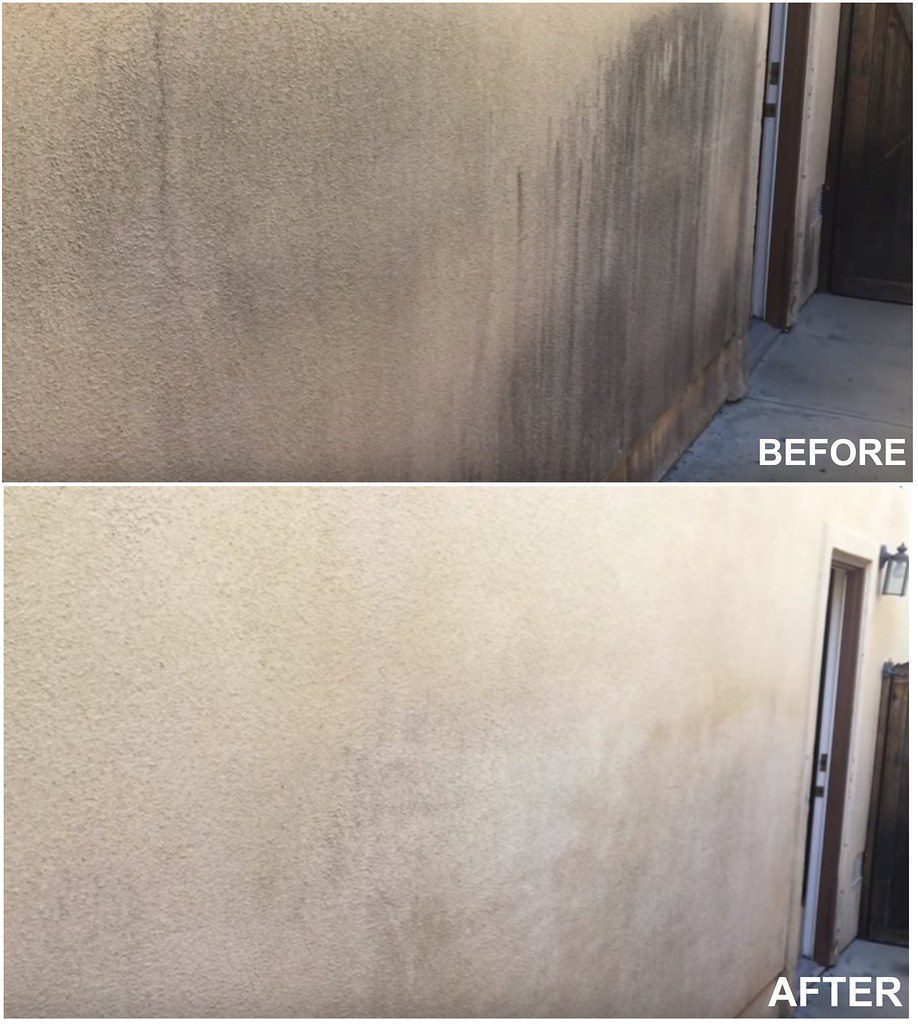
Soft washing is a low-pressure cleaning method that uses a detergent solution, typically sodium hypochlorite blended with a surfactant, to kill organic growth like algae, mildew, moss, and lichen at the root, then rinses it away at pressures close to a garden hose. The cleaning power comes from the chemistry, not the water. The solution dwells on the surface for several minutes, breaks down the organisms feeding on your siding or shingles, and rinses off without any high-pressure impact.
This is the method behind professional house washing in Garner: the green film that creeps up north-facing vinyl walls under Garner’s oak and pine canopy is a living algae colony, and soft washing kills it rather than smearing it around. It is also the only shingle-manufacturer-approved way to clean an asphalt roof. If you want the full picture on the siding problem specifically, see our guide to removing green algae from vinyl siding.
What Is Pressure Washing?
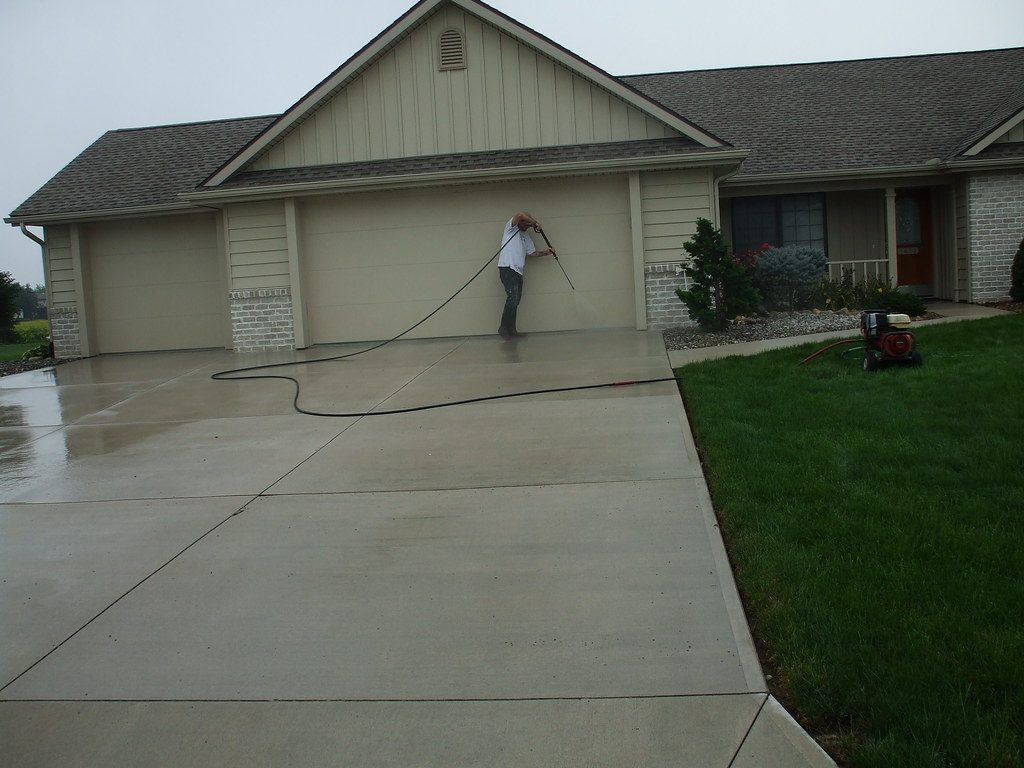
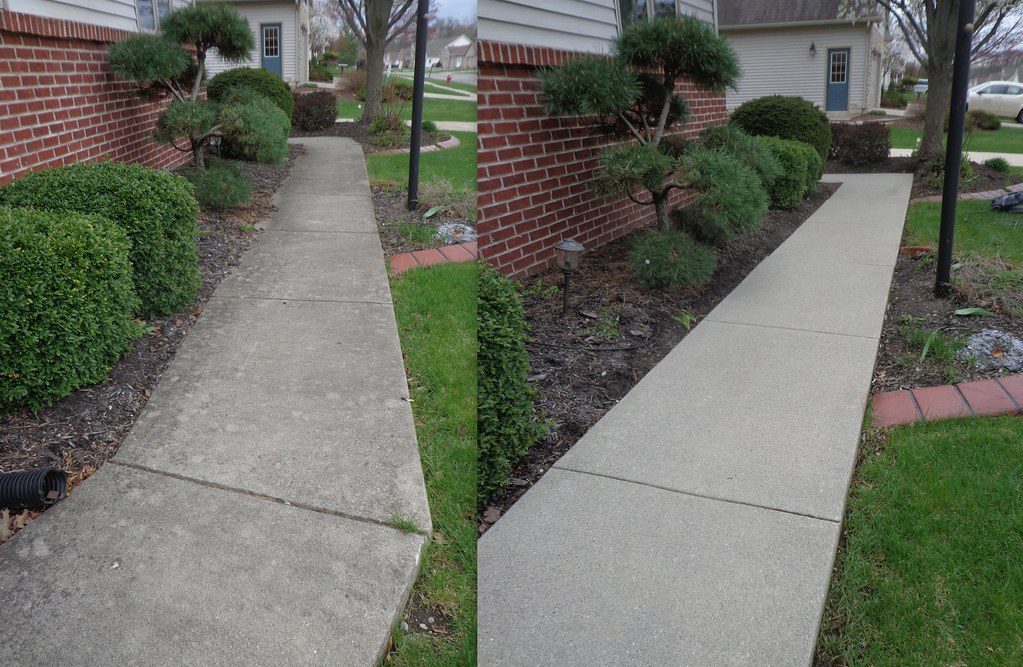
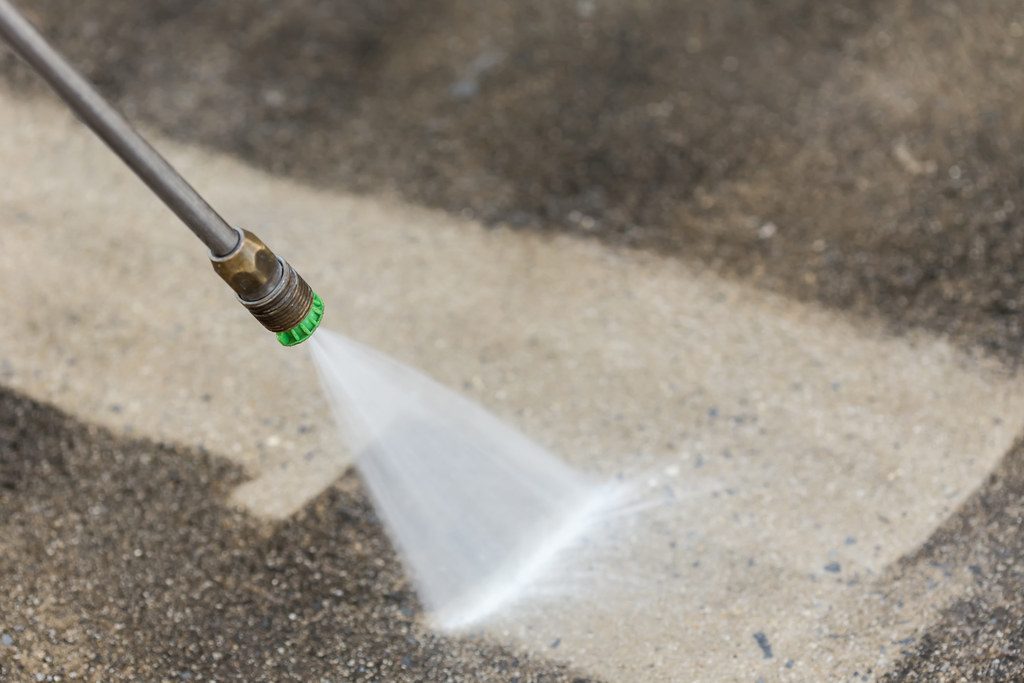
Pressure washing is a cleaning method that uses mechanically pressurized water, usually between 1,500 and 4,000 PSI, to physically blast dirt, grime, and stains off hard, durable surfaces. Where soft washing dissolves growth chemically, pressure washing removes buildup by force. On the right surface, nothing else comes close: a professional surface cleaner running at high pressure lifts years of gray oxidation, tire marks, and ground-in red clay out of a concrete driveway in a way no detergent alone ever will.
The key phrase is “hard, durable surfaces.” Concrete, brick pavers, and natural stone can take thousands of PSI without flinching. Vinyl siding, asphalt shingles, and wood cannot. Professionals still pair pressure with pre- and post-treatments on concrete, but the muscle in driveway and concrete cleaning is the pressure itself.
Soft Washing vs Pressure Washing: Side by Side
Here is the difference between soft washing and pressure washing at a glance:
| Factor | Soft Washing | Pressure Washing |
|---|---|---|
| Water pressure | Under 500 PSI, often near garden-hose levels | 1,500 to 4,000 PSI |
| Cleaning power | Chemistry: sodium hypochlorite plus surfactant | Mechanical force of the water |
| What it removes | Algae, mildew, mold, moss, lichen, pollen film | Dirt, red clay, gum, tire marks, oxidized grime |
| Best surfaces | Vinyl siding, roofs, wood, stucco, screens | Concrete, brick pavers, natural stone |
| Kills growth at the root | Yes, treats the biological source | No, removes what it can reach on the surface |
| Longevity of result | 1 to 2 years on siding, 2 to 4 on roofs | Concrete stays clean 1 to 2 years with post-treatment |
| Damage risk if misused | Low when mixed and rinsed properly | High on soft surfaces: etching, stripping, water intrusion |
The longevity row deserves a closer look. Because soft washing kills algae spores instead of just knocking off the visible film, a soft-washed vinyl wall in Eagle Ridge or Heather Hills typically stays green-free for a year or two. Blast that same wall with pressure alone and it often regreens within a few months, because the surviving spores simply regrow.
Which Surfaces Get Which Method?
The rule is simple: soft wash anything that grows things or can be damaged by force, and pressure wash hard mineral surfaces. Here is how that plays out on a typical Garner home.
Surfaces That Should Only Be Soft Washed
- Vinyl siding. High pressure can crack panels, blast water up behind the laps, and leave permanent streaks in oxidized vinyl. Chemistry does the work here.
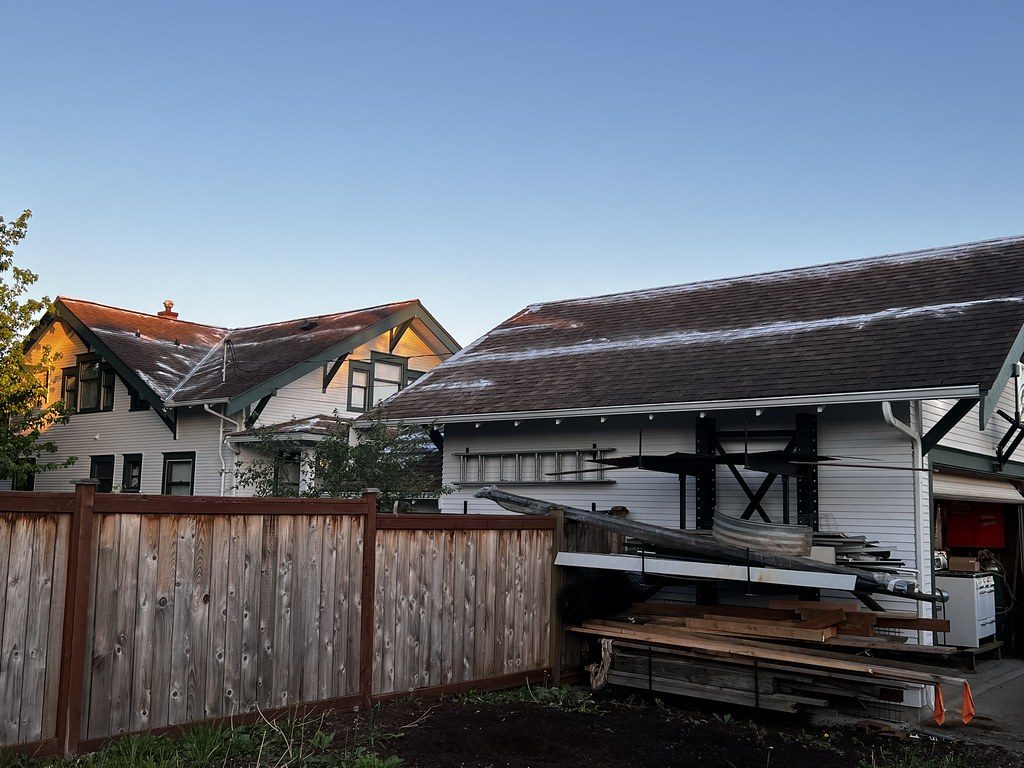
- Asphalt shingle roofs. The black streaks across Garner rooftops are Gloeocapsa magma eating the limestone in your shingles. Soft washing is the only method shingle manufacturers endorse, which is why our roof cleaning service never puts high pressure on a roof. Our post on black streaks on roof shingles covers the algae itself in detail.
- Wood decks and fences. Wood fibers are soft. A wood-safe wash uses low pressure and cleaners formulated for lumber.
- Stucco and painted surfaces. Pressure gouges stucco and peels paint; a gentle chemical wash does not.
- Window screens, gutters, and soffits. Mesh and thin aluminum deform easily under pressure.
Surfaces Built for Pressure Washing
- Concrete driveways, sidewalks, and patios. Cured concrete handles 3,000+ PSI, and it takes that much to pull Wake County red clay out of the pores.
- Brick pavers. Durable fired clay that responds well to a surface cleaner, with care taken around sanded joints.
- Natural stone walkways and retaining walls. Dense stone like granite and slate tolerates high pressure; softer stone gets a dialed-down approach.
Pro tip: You can spot a contractor who knows the difference by asking one question: “What PSI do you use on siding?” The right answer talks about soft washing, dwell time, and rinsing. If the answer is a big PSI number, keep calling. Garner’s newer subdivisions off White Oak Road and NC-42 see a wave of door-knockers every spring with one machine and one setting, and that setting is wrong for half the house.
What Happens When the Wrong Method Hits the Wrong Surface?
Using high pressure on a soft surface causes permanent damage, and the damage usually cannot be undone. These are the three most common failures across southeast Wake County:
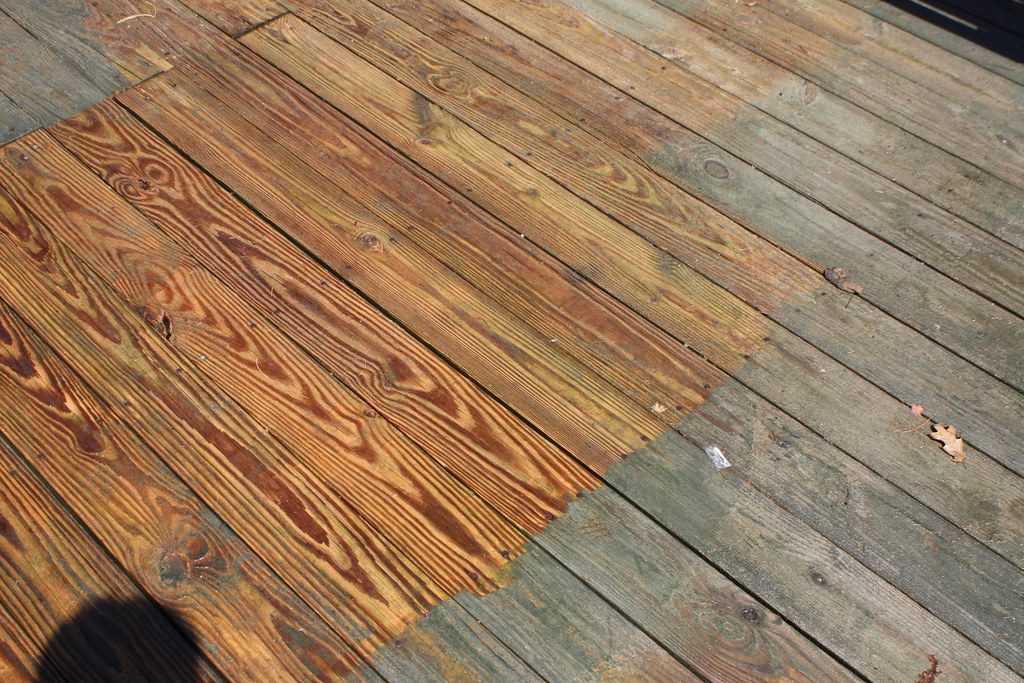
Etched and furred wood. A pressure wand held close to a deck board tears the soft springwood out from between the harder grain lines, leaving fuzzy, splintered stripes that sanding never fully fixes, and stain soaks in unevenly afterward.
Blown shingle granules. Those ceramic granules on asphalt shingles are the shingle’s UV armor. High pressure strips them into the gutters in seconds, and once they are gone the asphalt beneath ages fast. A roof that had 12 years of life left can lose several of them in one bad cleaning, and the damage can void the manufacturer warranty.
Water behind the siding. Vinyl laps are designed to shed rain falling downward, not a 3,000 PSI stream driven upward at the seams. Water forced behind the panels soaks the sheathing and insulation, where it cannot dry quickly. In a climate as humid as Garner’s, that trapped moisture is a head start for mold inside the wall.
Concrete is not immune to operator error either: a wand tip held too close leaves permanent etch marks, which is why professionals clean flatwork with a walk-behind surface cleaner instead of a bare wand.
Why the Right Answer Is Usually Both
Most Garner homes need soft washing and pressure washing on the same visit, because every property mixes both surface types. A typical house in Aversboro Forest or near the Lake Benson area has vinyl siding carrying green algae, a roof with black streaks on the north slope, a concrete driveway stained with red clay splash, and maybe a wood fence going gray. That is two soft-wash jobs, one pressure job, and one wood-safe job on a single lot.
This is why “which is better” is the wrong question. The better question is whether the company quoting you carries both capabilities and knows where the line sits. A one-machine operation will either under-clean your driveway or over-clean your siding. Bundling also saves money: you can see typical package ranges in our Garner pressure washing cost guide.
Frequently Asked Questions
Is soft washing better than pressure washing?
Neither method is better; they solve different problems. Soft washing is better for anything organic growing on a surface that force would damage, like algae on vinyl or a streaked roof. Pressure washing is better for ground-in grime on hard surfaces like concrete. A quality exterior cleaning company in Garner uses both, matched to each surface.
Can you pressure wash vinyl siding if you are careful?
No, and “careful” is not enough protection. Even moderate pressure can drive water behind the laps, streak oxidized panels, and crack brittle older vinyl, and it leaves algae spores alive to regrow within months. Low-pressure soft wash house washing cleans vinyl more thoroughly with none of those risks.
How long do the results of each method last?
A soft-washed house in Garner typically stays algae-free for 1 to 2 years, and a soft-washed roof for 2 to 4 years, because the treatment kills growth at the root. Pressure-washed concrete generally stays clean for 1 to 2 years when it gets a post-treatment; shaded lots under heavy tree cover, common around Lake Benson Park, sit at the shorter end of every range.
Is the soft wash solution safe for plants and pets?
Yes, when it is handled properly. A professional crew pre-wets landscaping, rinses plants during and after the wash, and keeps pets inside until surfaces dry. The solution breaks down quickly; dilution and rinsing discipline are exactly what you are paying a pro for.
Does soft washing cost more than pressure washing?
Usually not; pricing depends more on the surface and square footage than the method. Roof soft washing runs higher than house washing because of the safety and dwell-time requirements, while driveways price by area. For a real number on your specific home, request a free quote and you will get an up-front price, not a range.
Will a soft wash satisfy an HOA cleanliness notice in Garner?
Yes, and it is usually the fastest way to close one out. HOAs in Garner’s newer subdivisions off White Oak Road, NC-42, and the US-70 corridor send notices about green siding and stained driveways every spring; a soft wash for the siding and a surface cleaning for the driveway addresses both items in one visit.
Get the Right Wash on Every Surface in Garner
Understanding pressure washing vs soft washing comes down to one idea: chemistry for anything alive or delicate, pressure for hard mineral surfaces, and a contractor who carries both. That is how we approach every home we quote in Garner, Clayton, South Raleigh, Willow Spring, and Fuquay-Varina: siding and roofs get a proper low-pressure soft wash, concrete gets a surface cleaner with the right pre-treatment, and nothing gets the wrong tool.
If your siding is greening up or your driveway has gone gray and orange, reach out for a free quote with up-front pricing, or check the pressure washing cost guide for Garner to see what your project should run before you call.