Deck & Fence Washing in Garner, NC
Wood-safe low pressure and the right cleaners strip away mildew, algae, and gray UV weathering without gouging or furring the wood, so your deck looks like wood again.
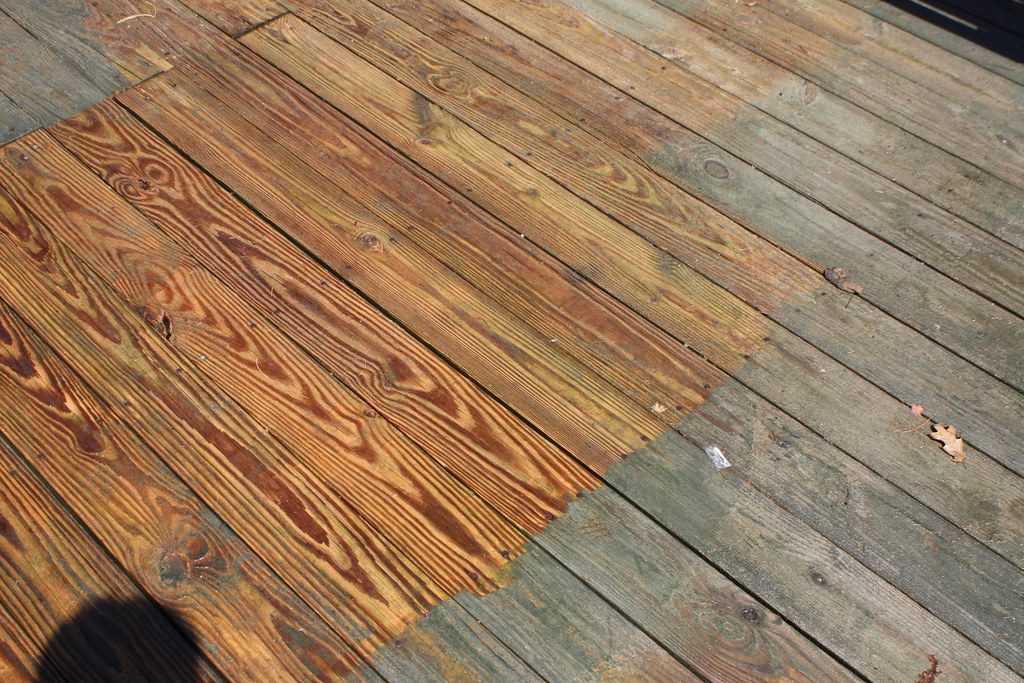
Why Wood Needs a Gentler Hand Than Concrete
Wood is the surface that separates careful exterior cleaners from everyone with a pressure washer. Concrete shrugs off high pressure; wood does not. Turn a strong nozzle on deck boards and you gouge trenches in the soft spring grain, print permanent wand stripes, and fur the surface, tearing the fibers into a fuzzy layer that feels splintery underfoot and soaks up stain unevenly forever after. Once wood is furred or gouged, only sanding fixes it.
So we flip the formula. On wood, the cleaners do the work and the water only rinses. We apply a wood-safe cleaning solution that dissolves mildew, kills algae, and loosens the gray layer of dead surface fibers, let it dwell, then rinse at low pressure with a wide fan tip, at a safe distance, moving with the grain. The result is clean, sound wood with the grain intact, which is exactly what you want whether the goal is a better-looking deck or a surface ready to take stain.
What Turns Garner Decks Green and Gray?
Three layers build up on outdoor wood here, and they need to be understood separately:
- Mildew and algae. The same humid Triangle climate that turns siding green loves a shaded deck. Backyard decks under the oak and pine canopy in neighborhoods like Van Story Hills, Heather Hills, and the Lake Benson area grow a slick green-black film, worst on boards that stay damp, and it makes steps genuinely slippery.
- Gray UV weathering. Sunlight destroys lignin, the natural binder in the wood surface, leaving a silver-gray skin of dead, loose fibers. It is not dirt, so no amount of plain-water washing removes it; it takes a cleaner and brightener formulated to release that dead layer.
- Everything the trees drop. April pollen film, leaf tannin stains that print brown shadows into horizontal boards every fall, and general grime that settles into the grain.
A proper wash addresses all three at once: the growth is killed rather than smeared around, the dead gray fibers release, and the tannin and pollen rinse out. Most Garner homeowners are genuinely surprised at how much warm wood color was hiding under a deck they assumed was just old.
Getting a Deck Ready for Stain: The Order Matters
If your end goal is a stained or sealed deck, washing is step one, and the sequence is not negotiable: wash, then dry, then stain. Stain needs open, clean wood pores to absorb and bond. Applied over mildew or gray dead fiber, it peels; applied to damp wood, it blotches and fails early. After we wash, the wood needs a minimum of 48 hours of dry weather before staining, and longer if it rains or the humidity stays high, which in a Garner summer means watching the forecast and giving it an extra day when in doubt.
Full honesty on scope: we do the washing and prep, and staining is a separate trade we do not perform. Our job is to hand you, or your stain contractor, a clean, sound, properly prepped surface, and to time the wash so the wood is ready when the stain goes on. If we begin partnering with a staining crew, we will say so plainly on this page; until then, plan the wash a few dry days ahead of your staining appointment.
Fences: Long Runs, Two Sides, Big Visual Payoff
A wood privacy fence is often the largest wooden structure on the property, hundreds of linear feet in the newer subdivisions off White Oak Road, NC-42, and the US-70 corridor, and it weathers faster than a deck because nobody sweeps or maintains it. Shaded runs along the north side go green, sun-blasted runs go gray, and the bottom foot picks up red clay splash from every hard rain. We wash fences with the same wood-safe chemistry-first approach, working in sections so the cleaner never dries on the wood, covering both faces where access allows, and hitting the clay-splashed base line with appropriate treatment. If your HOA has flagged a green or gray fence, this is typically the fastest way to close the notice out. A washed fence also brightens the entire backyard in a way people do not expect until they see it.
What About Composite Decking?
Composite and PVC decking (Trex, TimberTech, Azek, and similar) does not gray like wood, but it is not maintenance-free either. It grows mildew in shade, holds pollen and grime film, and can spot where leaves and organic debris sit. It also has its own damage rules: high pressure can scar the capped surface permanently and void the warranty. We clean composite with low pressure and manufacturer-appropriate cleaners, which lifts the film and kills the growth without touching the cap. If you know the brand, tell us when you book and we will match the method to the manufacturer's guidance.
Make It Part of a Full Backyard Reset
Decks and fences rarely weather alone. The patio below the deck usually carries the same algae (see driveway and concrete cleaning for how we handle flatwork), and the siding above it often shows the same green film that a soft wash house washing removes. Bundling the wood, the concrete, and the siding into one visit is cheaper than three separate trips and turns the whole outdoor space around before a graduation party, a cookout, or a listing photo shoot. For typical pricing on deck and fence work, see the Garner pressure washing cost guide, or request a quote with your approximate deck size and fence length and we will give you a firm number.
Frequently Asked Questions
Will pressure washing damage my wood deck?
High pressure absolutely can, which is why we do not use it on wood. Too much pressure gouges soft grain, leaves wand marks, and furs the surface, raising a fuzzy layer of broken fibers that feels like splinters and ruins stain absorption. We clean wood with low pressure and cleaners that dissolve the mildew and gray layer chemically, using a wide fan pattern, safe distance, and passes that follow the grain. The chemistry does the cleaning; the water just rinses.
Why did my deck turn gray?
Two things working together: UV light and moisture. Sunlight breaks down lignin, the natural glue in the wood surface, leaving a dead gray layer of loose fibers, and Garner humidity grows mildew and algae on top of it. Washing with a wood brightener removes the dead gray layer and kills the growth, revealing the sound wood underneath. Most homeowners are surprised how much warm wood color is still there under the gray.
Can I stain my deck right after you wash it?
Not immediately, and anyone who says otherwise is setting your stain up to fail. Wood needs to dry at least 48 hours after washing, longer after rain or in humid stretches, before stain or sealer can absorb properly. Stain applied to damp wood peels and blotches. We wash and prep; the staining itself is a separate trade we do not perform, so plan the wash a few dry days ahead of your staining appointment or DIY weekend.
Do you clean composite decking like Trex?
Yes, and it needs its own approach. Composite does not gray like wood, but it grows mildew in shade, holds pollen film, and can develop spotting from organic debris. High pressure can permanently scar or strip the capped surface, so composite gets low pressure and cleaners the manufacturers approve. Tell us the brand if you know it and we will match the method.
How often should decks and fences in Garner be washed?
Decks benefit from a wash every 1 to 2 years, since they are horizontal surfaces that collect pollen, leaf litter, and moisture, and shaded backyard decks grow mildew fastest. Fences can usually go 2 to 3 years between washes. If you are maintaining a stain finish, washing on that cycle also tells you when the finish is due for a recoat before the wood underneath starts weathering.
Ready for a like-new exterior?
Up-front pricing, fast scheduling, and results you can see from the curb. Serving Garner and southeast Wake County.