Roof Cleaning in Garner, NC
Low-pressure soft washing that kills the black algae streaking your shingles, using the method roofing manufacturers actually recommend, with zero damaging pressure.
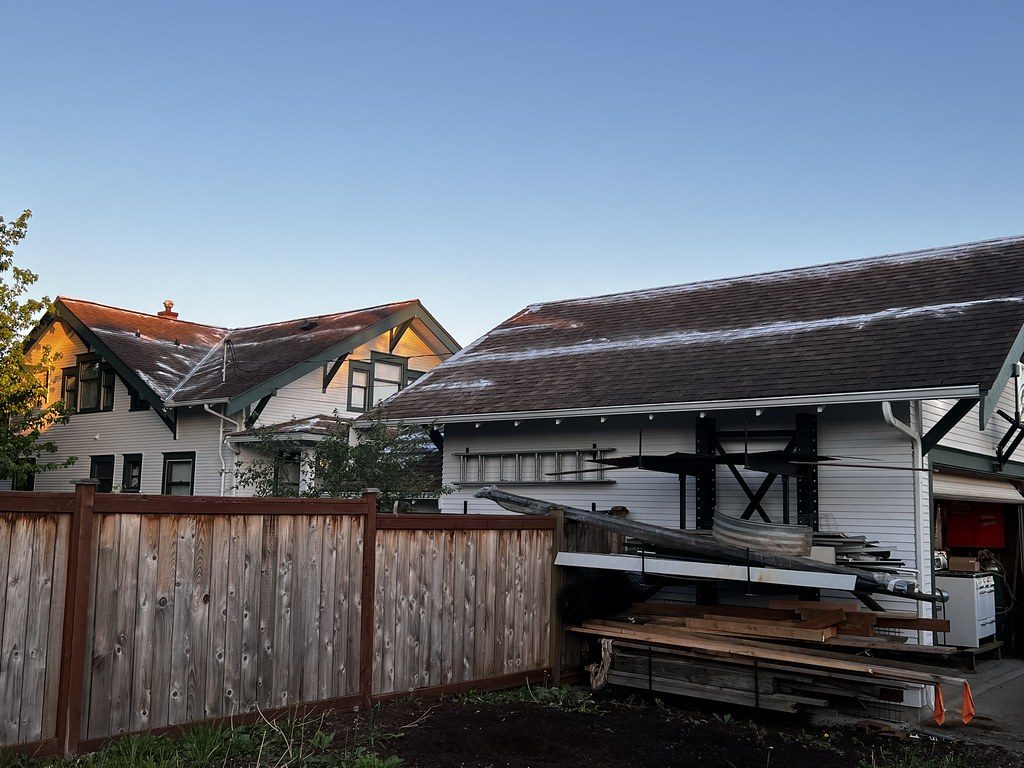
What Are the Black Streaks on Garner Roofs?
Those dark streaks running down asphalt shingle roofs all over Garner are not dirt, soot, or water stains. They are a living cyanobacteria called Gloeocapsa magma, and it is literally eating your roof. Modern asphalt shingles contain crushed limestone as a filler, and Gloeocapsa magma feeds on that limestone, spreading a little further every season. The black color is the protective sheath the organism builds to shield itself from UV light, which is why the streaks darken and widen over time instead of fading.
The Triangle's humidity makes this a when, not an if, for most roofs here. Growth starts and spreads fastest on north-facing slopes and shaded sections that stay damp longest after rain, which is why homes under the mature canopy in neighborhoods like Heather Hills, Aversboro Forest, and the streets around Lake Benson tend to streak earliest. Beyond looks, the algae holds moisture against the shingles, feeds on their structure, and in combination with moss and lichen can lift edges and accelerate granule loss. Left alone for years, it genuinely shortens shingle life, which makes cleaning a maintenance decision, not just a cosmetic one.
Why Soft Wash Only? Because Pressure Destroys Shingles
This is the most important thing to know before hiring anyone to clean your roof: a pressure washer should never touch asphalt shingles. Ever. The granules embedded in each shingle are its armor against UV and weather, and high-pressure water strips them off by the thousands, aging a roof years in a single afternoon. It can also lift shingles, drive water under them, and void the manufacturer warranty outright.
The correct method, and the one recommended by the Asphalt Roofing Manufacturers Association (ARMA), is a soft wash: a sodium hypochlorite based cleaning solution applied at low pressure, comparable to rainfall, and allowed to kill the growth chemically. No blasting, no scrubbing, no granule loss. We follow that standard on every roof. We also stay off the shingles wherever the job allows, working from ladders, eaves, and lifts rather than walking the roof, because foot traffic on a sun-baked or aging shingle roof causes its own damage. If a section must be walked to be treated, we say so and tread carefully, but we never walk a fragile roof just because it is faster.
Our Roof Cleaning Process
- Inspection and quote. We look at slope, shingle condition, access, and how heavy the growth is, then price the roof as it actually is.
- Protect the surroundings. Landscaping below the roofline gets pre-wet with fresh water, and we manage where runoff goes throughout the job.
- Gutter protection during the wash. Downspouts drain onto beds and lawns, so we control the solution entering the gutter system, divert or capture runoff at the downspouts where needed, and flush the gutters and affected areas with fresh water when we finish.
- Apply the soft wash solution. The ARMA-style sodium hypochlorite mix goes on at low pressure and dwells while it kills the algae, moss, and lichen.
- Final rinse of everything below. Siding, windows, and plants under the work area get a thorough freshwater rinse.
Moss and Lichen Are a Different Problem Than Streaks
Black streaking is a surface colony; moss and lichen are attached organisms with grip. Moss pads hold water against shingles like a wet sponge and can lift shingle edges as they thicken, and lichen anchors into the granule layer itself. The treatment kills both, but here is the honest part: you should not rip dead moss and lichen off a roof, because tearing them out takes granules with them. The right approach is to let the treatment kill the growth and let weather release it gradually. Heavy moss may get a gentle brushing where the shingles can safely take it, but patience protects the roof.
What Results Should You Expect, and When?
Some roof cleaning ads promise a magazine-cover roof by dinnertime. We would rather be straight with you: the organisms die the day we treat, the roof looks meaningfully better immediately, and then it keeps improving. Dead algae loses its grip and rinses away with the following rains, so streaks fade progressively over days to weeks, and thick moss or lichen releases over a longer arc. By the time a few good rain cycles have passed, the roof reads clean from the street and stays that way for years, because the growth was killed at the root rather than shaved off the top.
Roof Cleaning Pairs Naturally With the Rest of the Exterior
The same algae streaking your roof is usually growing on your siding, and the runoff patterns that feed roof algae also feed the black tiger striping on gutter faces. Most customers who book a roof wash pair it with a soft wash house washing or gutter brightening so the whole top half of the home resets in one visit. If you are getting the house ready to sell, a streak-free roof is one of the highest-impact line items on the list, since the roof is the single biggest surface in every listing photo. For typical pricing across all of these services, see the Garner pressure washing cost guide, or request a quote and we will give you an exact number for your roof.
Frequently Asked Questions
Will roof cleaning damage my shingles?
Not the way we do it. We use the soft wash method the Asphalt Roofing Manufacturers Association (ARMA) recommends: a sodium hypochlorite based solution applied at low pressure, essentially the pressure of heavy rain, then left to do the work chemically. What damages shingles is pressure washing, which strips the protective granules and can void warranties, and unnecessary foot traffic on aging shingles. We never put a pressure washer on a roof, and we work from ladders and roof edges wherever possible instead of walking fragile areas.
How much does roof cleaning cost in Garner?
Most roof soft washing in Garner runs around $0.30 to $0.35 per square foot of roof area. A typical 1,700 square foot roof comes out near $544. Steepness, height, heavy moss or lichen, and difficult access can move the number, so we quote each roof individually. The Garner pressure washing cost guide has more detail on typical ranges.
Why are the black streaks only on part of my roof?
Because Gloeocapsa magma follows moisture. North-facing slopes and sections shaded by trees stay damp longest after rain and dew, so the algae colonizes them first and thickest. South-facing slopes in full sun often stay clean for years while the north side streaks badly. If you can only see your front slope from the street, it is worth checking the back and north sides, since the worst growth is usually where you do not look.
How long until the streaks are gone after treatment?
The algae dies on treatment day, and roofs look noticeably better immediately, but the streaks do not vanish in an afternoon. Dead algae releases and washes away gradually with rain and weathering over the following days and weeks, and heavy accumulations can take a few rain cycles to fully rinse clean. Moss and lichen brown out and release over weeks as well. We would rather set that expectation honestly than promise an instant before-and-after.
How long will my roof stay clean after a soft wash?
Typically several years, commonly in the 3 to 6 year range in the Triangle depending on shade, tree cover, and slope orientation. Because the soft wash kills the colony rather than shaving the surface off, regrowth has to start over from new spores. Roofs under heavy canopy or with persistent shade on the north slope sit at the shorter end; open, sunny roofs at the longer end.
Ready for a like-new exterior?
Up-front pricing, fast scheduling, and results you can see from the curb. Serving Garner and southeast Wake County.