Driveway & Concrete Cleaning in Garner, NC
Surface cleaning with pre-treatment and post-treatment that lifts red clay, oil, tire marks, and years of gray buildup out of your concrete, evenly, with no wand stripes.
Why Concrete Is the One Surface That Actually Wants Pressure
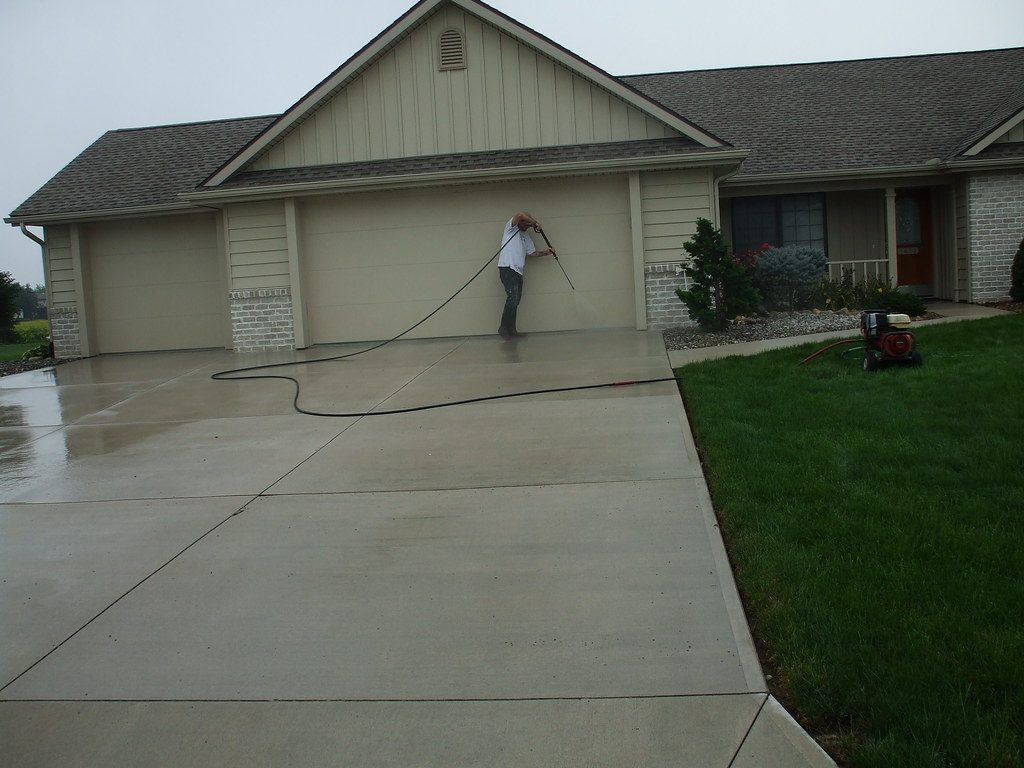
We soft wash siding and roofs because pressure damages them. Concrete is the opposite: it is dense, hard, and full of pores that trap grime, and it needs genuine pressure to come clean. The catch is how that pressure gets delivered. A handheld wand carves visible stripes into a driveway because no human can hold perfectly consistent distance, angle, and overlap across 600 square feet. That is why we clean flatwork with a professional surface cleaner: a spinning bar with two high-pressure nozzles inside a hooded deck that rides at a fixed height. Every square inch of the slab gets identical treatment, so the result is uniformly clean concrete instead of a zebra pattern.
Pressure is only half the job, though. We pre-treat the concrete with detergents matched to what is actually on it, clean with the surface cleaner, then post-treat any remaining organic staining so the slab dries bright and even. Skipping the chemistry is the other classic DIY mistake, especially with the stain Garner driveways are famous for.
What Makes Garner Driveways Turn Orange?
Wake County sits on red clay, and every hard rain splashes it onto driveways, sidewalks, curbs, garage aprons, and foundation lines. The orange color is not surface dirt; it comes from iron oxides in the clay, essentially the same chemistry as rust, and those iron compounds bond into the pores of the concrete. That is why a garden hose does nothing and why even a rented pressure washer leaves an orange ghost behind: the stain is chemically attached, not sitting on top.
Removing it takes treatment, not just pressure. We apply chemistry that breaks the iron bond before the surface cleaner runs, and hit any surviving spots afterward. You see this staining all over town, from established streets in Meadowbrook and Cloverdale to brand-new flatwork in South Creek and Bingham Station, where fresh grading means bare clay right at the edge of the concrete. Deep-set rust stains, fertilizer stains, and battery acid marks that go beyond normal clay splash fall under our dedicated rust and stain removal service.
The Other Stains We Pull Out of Garner Concrete
- Oil and drip stains. Degreaser, dwell time, and surface cleaning release most automotive stains. Old, soaked-in oil can leave a faint shadow, and we will tell you that before we start rather than after.
- Tire marks. Hot tires leave plasticizer scuffs where you park and turn. They respond to targeted pre-treatment plus the surface cleaner.
- Leaf and tannin stains. The oak canopy over older Garner neighborhoods drops leaves that print brown tannin shadows into concrete every fall. Post-treatment brightens these out.
- Gray organic buildup. The general darkening most people call dirt is largely algae and mildew living in the surface pores, the same organisms that turn siding green. Treatment kills it so the concrete stays bright longer.
- Irrigation rust trails. Well water and sprinkler overspray paint orange streaks that need the same iron-targeting chemistry as clay stains.
More Than Driveways: Sidewalks, Patios, and Garage Aprons
Anything flat and paved gets the same treatment. Front walks and city sidewalk sections, back patios, pool surrounds, garage aprons and interiors, basketball pads, and curbing all clean up with the surface cleaner and the right pre-treatment. The garage apron deserves special mention because it collects everything at once: oil drips, tire marks, clay tracked off the street, and the grime line where the door seals. Patios in shaded backyards, common under the tree cover around the Lake Benson area, usually carry more algae than the driveway out front and can be genuinely slick when wet, so cleaning them is as much a safety fix as a cosmetic one.
Most customers bundle concrete with a house wash, and it is the combination we recommend most: clean siding above a stained driveway never quite looks finished, and doing both in one visit resets the entire front elevation at once.
Should You Seal the Concrete Afterward?
Freshly cleaned concrete is the only concrete worth sealing, so the question comes up on almost every job. Our honest take: sealing is a worthwhile optional add-on, not a necessity. A penetrating sealer slows down how fast clay, oil, and organic growth re-establish, makes the next cleaning easier, and adds protection against water absorption and freeze-thaw spalling in our handful of hard freezes each winter. Unsealed concrete simply gets cleaned a little more often. If you want numbers for either path, the Garner pressure washing cost guide covers typical per-square-foot pricing for concrete work.
What to Expect on Cleaning Day
Move vehicles off the driveway before we arrive, and we handle the rest: pre-treating stains, running the surface cleaner across every slab section, detailing edges and corners by hand, post-treating any stubborn spots, and rinsing all the loosened grime away so it does not dry on your lawn or curb. Most residential driveways take one to two hours. The concrete is walkable immediately and ready for cars as soon as we are done, though full brightening continues over the next day or two as the slab dries completely and any post-treatment finishes working.
Frequently Asked Questions
How much does driveway cleaning cost in Garner?
Most concrete cleaning in Garner runs $0.15 to $0.45 per square foot depending on size, condition, and how much stain treatment is needed. A typical two-car driveway around 640 square feet lands near $192. Heavy red clay staining, oil spots, or years of untouched buildup push toward the top of the range; lightly soiled concrete on a maintenance schedule sits near the bottom. See the Garner pressure washing cost guide for full details, or request an exact quote.
Will pressure washing remove the orange red clay stains?
Pressure alone will not, and that surprises a lot of homeowners. The orange color comes from iron oxides in Wake County clay that chemically bond into the concrete surface, so blasting just cleans the concrete around the stain. We pre-treat clay staining with chemistry that breaks that iron bond, then run the surface cleaner, and stubborn spots get a post-treatment. Deep, old rust-type stains sometimes need dedicated rust and stain removal as a follow-up.
Can you get oil stains out of my garage apron or driveway?
Usually most of it, honestly not always all of it. Fresh oil releases well with degreaser, dwell time, and hot surface cleaning. Oil that has soaked into porous concrete for years leaves a shadow even after the surface is clean, because the oil is down in the slab, not on it. We treat every oil spot and tell you up front how much improvement to expect on the old ones.
Will the surface cleaner leave stripes or wand marks on my concrete?
No, and that is exactly why we use one. Wanding a driveway leaves the zebra striping you see on DIY jobs, because every pass overlaps at slightly different pressure and angle. A surface cleaner spins two nozzles under a hood at a fixed height, so the entire slab gets identical, even cleaning. Edges and corners get detailed by hand afterward.
Should I seal my driveway after cleaning?
Sealing is optional, and plenty of Garner driveways do fine without it. What a quality sealer buys you is slower re-soiling, easier future cleanup, and some protection against water and freeze-thaw wear, and it only makes sense applied to freshly cleaned, fully dried concrete. If you want it, we can quote it as an add-on after the wash; we will not pretend it is mandatory, because it is not.
Ready for a like-new exterior?
Up-front pricing, fast scheduling, and results you can see from the curb. Serving Garner and southeast Wake County.