Black Streaks on Roof Shingles: Causes & Fix
Garner Pressure Washing • July 13, 2026 • 9 min read
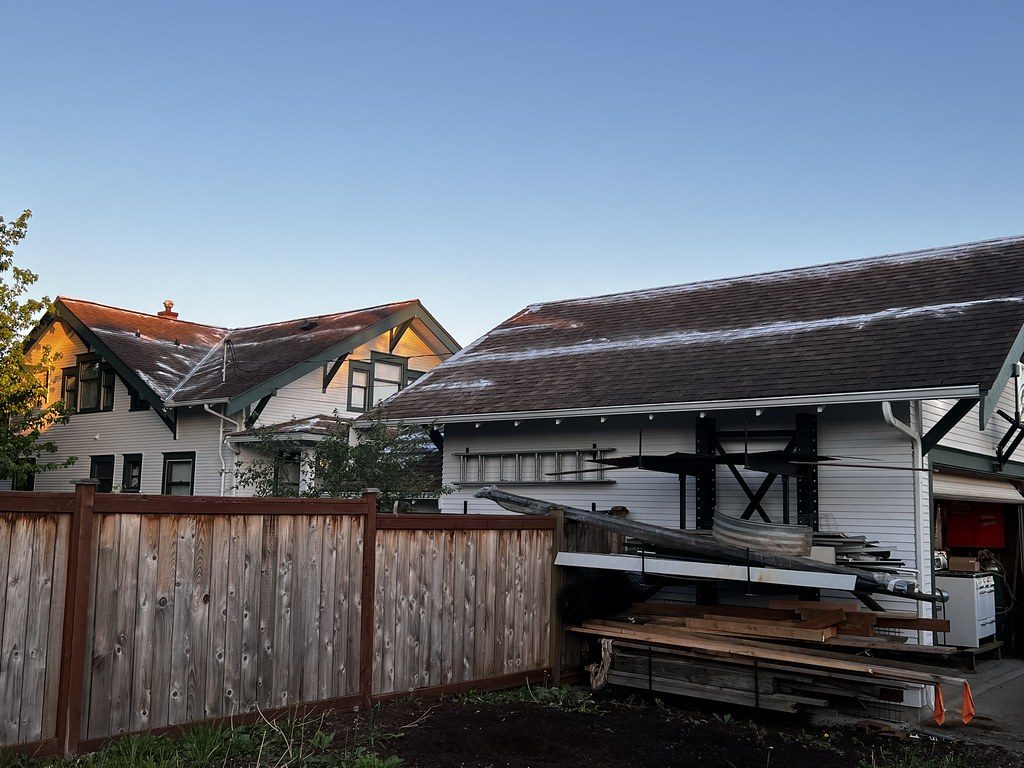
Look up at almost any asphalt shingle roof in Garner that is more than a few years old and you will see them: dark vertical stains running from the ridge toward the gutters, usually heaviest on one side of the house. Those black streaks on roof shingles are not dirt, soot, or “just how roofs age.” They are a living organism that is slowly eating your shingles, and in southeast Wake County’s humid climate it thrives on nearly every street from Adams Point to the Lake Benson area.
The good news: the streaks are fixable, at a fraction of the cost of a new roof. The bad news: the most common DIY instinct, pointing a pressure washer at the shingles, can do more damage than the streaks themselves. This guide covers what the streaks are, why they matter, why pressure washing a shingle roof is destructive, and how professional soft washing removes the stains safely.
What Causes Black Streaks on Roof Shingles?
The black streaks on roof shingles are colonies of Gloeocapsa magma, a hardy airborne algae that feeds on the crushed limestone filler inside asphalt shingles. Shingle manufacturers blend limestone into the asphalt to add weight and lower cost, and that limestone happens to be a food source. The algae lands on your roof as spores, takes hold wherever moisture lingers, and builds a dark protective coating around itself to survive direct sun. That dark coating is what you see as streaking.
A few things about how it spreads explain the pattern you see from the curb:
- It follows moisture. North-facing slopes and sections shaded by trees stay damp longer after rain and morning dew, so the streaks almost always show up there first. Garner’s mature oak and pine canopy in neighborhoods like Aversboro Forest and Heather Hills gives the algae exactly the shade it wants.
- It runs downhill. Rain carries the colonies down the slope, which is why the stains form vertical streaks rather than random patches.
- It compounds. Each colony releases more spores that spread across your roof and to your neighbors’ roofs, which is why one streaked house in a subdivision usually predicts more nearby within a few seasons.
Humid summers, warm nights, and regular afternoon storms make the Triangle close to ideal for Gloeocapsa magma. That is why black streaking shows up on Garner roofs as young as 5 to 8 years old, long before the shingles are worn out.
Do Black Streaks Actually Damage Your Roof?
Yes. Black roof streaks are a shingle problem, not just a cosmetic one, and the damage builds the longer the algae stays. Here is what it does over time:
- Granule loss. The algae feeds at the limestone in the shingle, loosening the protective ceramic granules on the surface. Granules are the shingle’s armor against UV light; once they shed, the asphalt underneath degrades faster.
- Heat absorption. Dark streaks absorb more sunlight than clean shingles. Hotter shingles age faster, and in a Garner July that extra heat load also works against your attic insulation and cooling bills.
- Moisture retention. Established algae holds moisture against the shingle surface and gives lichen and moss a foothold, and those organisms are even harder on shingles.
- Shortened shingle life. Put together, heavy algae growth can take years off a roof that should have lasted 20 to 30, and replacing a roof in Wake County commonly runs $10,000 or more.
There is also a paperwork side to it. Some homeowners insurance carriers flag heavily stained roofs during aerial or drive-by inspections, and HOAs in Garner’s newer subdivisions off White Oak Road and NC-42 send exterior cleanliness notices that can include the roof. Fair or not, a streaked roof reads as a neglected roof.
Why You Should Never Pressure Wash a Shingle Roof
A pressure washer removes black streaks by blasting off the surface of the shingle, and that is exactly the problem. High-pressure water strips the protective granules, can lift and crack shingles, and drives water under the shingle edges toward the decking. Most shingle manufacturers explicitly exclude pressure washing damage from their warranties, so a DIY pressure wash can void the coverage on a roof that still had 15 years of warranty left.
The Asphalt Roofing Manufacturers Association (ARMA), the trade body for shingle manufacturers, addresses algae staining directly in its technical bulletins: the recommended cleaning method is a low-pressure application of a sodium hypochlorite and water solution, never high-pressure washing. In the industry this method is called soft washing. Here is how the two approaches compare on an asphalt roof:
| Pressure Washing a Roof | Soft Washing a Roof | |
|---|---|---|
| Water pressure | 1,500 to 4,000 PSI | Roughly garden-hose pressure |
| How it removes streaks | Physically blasts the surface | Chemistry kills the algae |
| Granule loss | Significant, immediate | None from the process |
| Kills algae at the root | No, regrowth in months | Yes |
| Manufacturer warranty | Typically voided | ARMA-endorsed method |
| Typical results last | A few months | 2 to 5 years |
If you want a deeper breakdown of when each method belongs on a house, our guide to soft washing vs pressure washing walks through it surface by surface.
Pro tip: Be wary of any roof cleaning quote that mentions PSI, surface cleaners, or “turbo nozzles.” A professional soft wash roof cleaning uses dedicated pumps that apply the cleaning solution at low pressure and let the chemistry do the work. If a crew shows up with only a pressure washer, keep them off your shingles.
How Does Soft Washing Remove Black Roof Streaks?
Soft washing removes black streaks by killing the Gloeocapsa magma colony with an algaecide solution instead of blasting it off. The process on a typical Garner home looks like this:
- Protect the surroundings. Landscaping below the roofline is pre-wetted and rinsed throughout the job, and downspout runoff is controlled.
- Apply the solution. A sodium hypochlorite based mix, blended with surfactants that help it cling to the slope, is applied at low pressure across the stained sections.
- Let the chemistry work. The solution kills the algae on contact, along with any mildew, moss, or lichen that came with it.
- Rinse or let rain finish the job. Some streaking lightens immediately; the rest of the dead algae releases its grip and washes away with the next several rains.
Set your expectations on timing: a soft washed roof does not always look perfect the moment the crew leaves. Heavy, long-established streaks typically fade over days to weeks as rain carries off the dead growth. That gradual clearing is normal and is actually a sign the treatment worked at the root rather than just rinsing the surface. Results on Triangle roofs typically hold for 2 to 5 years depending on shade and tree cover.
Since the same algae family also grows on siding, many homeowners pair a roof treatment with a house soft wash in the same visit. If your vinyl is showing the green film that goes with our climate, see our guide on removing green algae from vinyl siding.
How to Keep Black Streaks From Coming Back
You cannot make a Garner roof algae-proof, but you can slow regrowth considerably:
- Install zinc or copper strips at the ridge. Rain washing over the metal releases trace ions down the slope that inhibit algae growth. It is a modest add-on during a roof cleaning or any roof work.
- Trim back overhanging branches. More sunlight means faster drying, and faster drying is the single biggest thing working against Gloeocapsa magma. This matters most under heavy oak and pine cover.
- Keep gutters clean and flowing. Debris-clogged gutters hold moisture at the roof edge and feed growth along the eaves.
- Choose algae-resistant “AR” shingles at replacement time. Their copper-infused granules resist growth, though they do not prevent it entirely.
- Re-treat on a cycle. A soft wash every 3 to 5 years keeps colonies from getting established enough to stain.
Frequently Asked Questions
Are black streaks on shingles a sign I need a new roof?
Usually not. Black streaking is surface algae, not structural failure, and a roof with streaks but intact, flat, granule-covered shingles is a cleaning candidate, not a replacement candidate. If shingles are curling, cracking, or shedding heavy granules into the gutters, have a roofer evaluate first.
How much does it cost to remove black streaks from a roof in Garner?
Most single-family soft wash roof cleanings in the Garner area fall in the $450 to $900 range, depending on roof size, pitch, and how established the growth is. Larger or steeper roofs in neighborhoods like Adams Point and South Creek can run more. The pressure washing cost guide covers roof cleaning pricing alongside other services.
How long does a roof soft wash take to work?
The algae is killed the day of treatment, but the visible streaks fade over days to weeks as rain rinses the dead growth off the shingles. Light streaking often clears with the first good storm; heavy multi-year staining can take a month of normal rainfall to fully release.
Will the cleaning solution hurt my plants or pets?
Not when the job is done correctly. Landscaping below the work area is pre-wetted, rinsed during application, and rinsed again afterward to dilute any runoff, and pets simply stay inside during the visit. This is a standard part of every professional roof cleaning visit, not an extra.
Why is only one side of my roof streaked?
Because Gloeocapsa magma needs lingering moisture, and your slopes do not dry evenly. North-facing slopes get less direct sun, and sections shaded by trees stay damp hours longer. That is why a home backing up to wooded areas near Lake Benson Park or White Deer Park will often streak on the tree side years before the street side shows anything.
Can I just spray the streaks with bleach from a garden sprayer?
You can, but DIY roof chemistry is riskier than it sounds. Getting the mix strong enough to kill the algae yet controlled enough to protect metal flashing, gutters, and landscaping takes purpose-built equipment, and walking a pitched shingle roof with wet chemicals underfoot is genuinely dangerous. This is one job where hiring it out is the safer call by a wide margin.
Get the Black Streaks Off Your Garner Roof
Black streaks on your roof shingles only spread and only get more expensive to ignore. A low-pressure soft wash kills the algae at the root, protects the granules your shingles depend on, and restores the roofline your house had when it was new, with results that typically last for years.
Garner Pressure Washing serves Garner, Clayton, South Raleigh, Willow Spring, and Fuquay-Varina with up-front pricing and free quotes. Contact us for a firm quote on your roof, usually from photos or a quick drive-by, no ladder required on your part.