Moss on Roof Shingles: Why It Matters More Than Algae
Garner Pressure Washing • September 26, 2026 • 8 min read
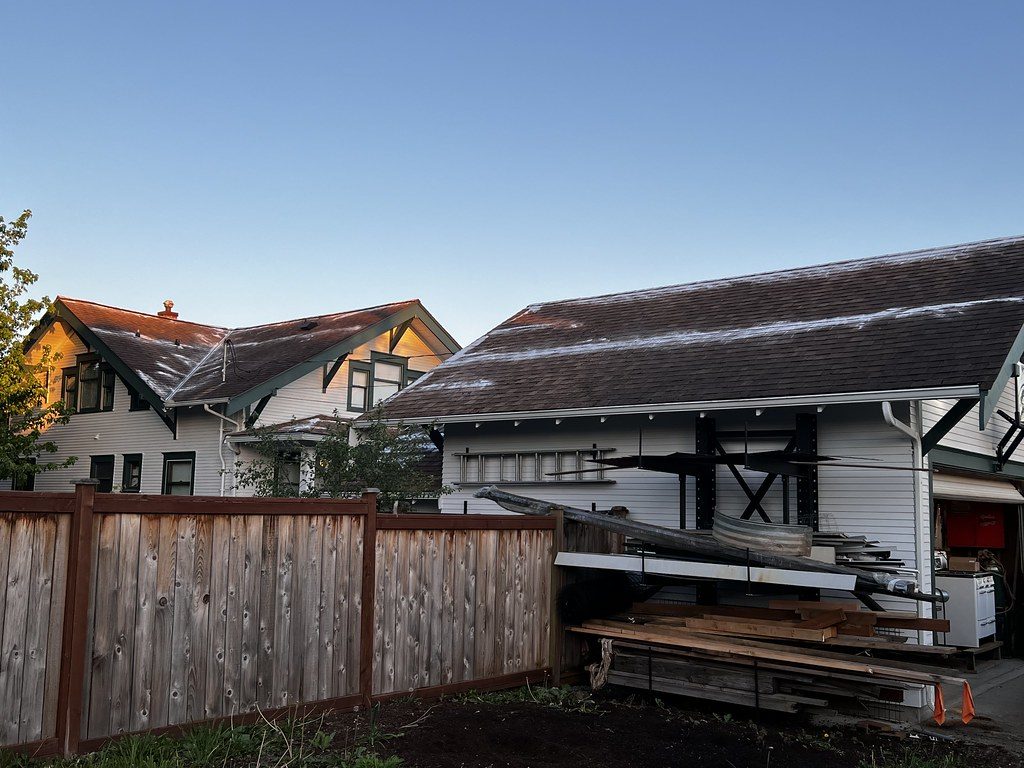
Black streaks get most of the attention, but the green cushions growing along the bottom edge of a shaded roof are the growth to take seriously. If you are wondering how to get rid of moss on a roof, start with the difference the roofing industry itself draws. The Asphalt Roofing Manufacturers Association (ARMA) says there is “no scientific evidence that algae is damaging to asphalt shingles,” while moss “can be detrimental to asphalt shingle performance” (ARMA, Algae and Moss Prevention and Cleaning).
That makes moss a different job from streaks. In Garner it shows up where the tree canopy is heaviest: the north slopes under tall pines in Aversboro Forest and Heather Hills, and the wooded lots near Lake Benson where roofs stay damp well into the afternoon. This guide covers how to tell moss from algae and lichen, why moss matters, the cleaning method the shingle industry publishes, the mistakes that turn a moss problem into a roof repair, and when to call a roofer instead of a cleaner.
Is Moss on a Roof Worse Than Black Streaks?
Yes. Moss is the one common roof growth that the shingle industry says can harm the roof itself. ARMA explains that moss “can cause the leading edges of the shingles to lift or curl, which increases the risk of shingle blow-off during wind events.”
The mechanism is simple once you picture it. A moss clump grows in the gap where one course of shingles overlaps the next. As it thickens, it wedges under the bottom edge of the shingle above and holds water against it. A lifted edge is an edge the wind can catch, and central North Carolina gets its share of summer thunderstorms and tropical storm remnants.
Black streaks are a different story. ARMA treats algae as an appearance problem. If you are dealing with dark vertical staining rather than green growth, our guide to black streaks on roof shingles explains what the streaks are and how they are removed. This post stays with moss.
How Can You Tell Moss From Algae and Lichen?
Moss is raised, soft and green; algae is flat staining; lichen is a crusty, flat patch that grips the surface. Look from the ground with binoculars before anyone climbs a ladder.
| Growth | What it looks like | Where it shows up | What ARMA says | Right response |
|---|---|---|---|---|
| Algae | Dark vertical streaks, flat to the touch | Whole slopes, heaviest on shaded planes | No evidence it damages shingles | Clean when the look bothers you |
| Moss | Green, raised, spongy clumps | Shingle overlaps, lower courses, north-facing and shaded planes | Can lift or curl leading edges | Treat it, then let it release |
| Lichen | Grey-green or pale crusty circles | Scattered patches, often on older roofs | Not addressed separately | Treat it; never pry it off |
| Tree droppings | Localized dark spots or debris | Directly under overhanging branches | ARMA notes these are localized, not algae | Trim, then clean |
ARMA also notes that moss “tends to grow on north facing roof planes that receive less direct sunlight and stay damp longer than south facing planes.” On a typical Garner two-story, that means the back slope facing a wooded buffer, not the street side.
How to Get Rid of Moss on a Roof Without Tearing Shingles
The method the shingle industry publishes is a chemical treatment followed by patience, not scraping and not pressure. ARMA’s guidance is specific:
- Mix the solution. ARMA calls a “50:50 mix of laundry strength liquid chlorine bleach and water” the most effective way to clean algae and moss from a roof.
- Apply it gently. GAF’s technical bulletin on roof staining (TAB-R-102) describes applying its cleaning mix with a garden sprayer and protecting the shrubs below (GAF TAB-R-102).
- Let it dwell. ARMA says to leave the solution on for 15 to 20 minutes.
- Rinse at low pressure. ARMA: “rinse thoroughly with low pressure water.”
- Wait for the moss to let go. ARMA says “moss will loosen over time and may be removed with a leaf blower.”
That last step is the one most people skip. Dead moss still has a grip on the granule layer the day it is treated. Pulling it off at that point takes granules with it, and granules are the shingle’s protective surface. Once it has dried out and loosened, a leaf blower moves it without scraping.
Pro tip: Do not scrape, brush or pry moss off a shingle roof, even when it looks loose. ARMA’s companion bulletin on roof discoloration says plainly: “DO NOT use a power washer or any type of brush or broom” (ARMA, Algae Discoloration of Roofs). Treat it, give it time, and blow off what releases.
ARMA is just as direct about pressure: “Never use a pressure washer to clean an asphalt shingle roof as this will cause granule loss and very likely premature failure of the roof system.” On moss this matters twice over, because the jet drives straight into the overlaps where the moss grows and can lift the very edges you are trying to protect. A proper soft wash roof cleaning follows the low-pressure method above, and our comparison of soft washing and pressure washing explains why the two tools are not interchangeable.
What Makes Moss Grow Back?
Moss comes back wherever the conditions that grew it are still there: shade, trapped debris and slow drying. ARMA’s prevention advice targets those conditions directly.
- Sunlight. ARMA recommends “trimming tree branches back to allow more sunlight to reach the roof and minimize debris accumulation.” Garner’s mature oak and pine canopy is the main reason moss is more common in older neighborhoods like Van Story Hills and Cloverdale than on newer, open lots off NC-42.
- Debris. Pine needles and leaf litter packed into valleys and behind chimneys hold water and give moss something to root into. Clearing them from the ground with a blower or by a roofer keeps the roof drying evenly.
- Drainage. ARMA says to keep gutters clean and to “not allow gutters from an upper roof to drain directly on a lower roof.” A downspout emptying onto a lower porch roof keeps that section wet for hours after every storm.
If you are re-roofing, ARMA lists zinc or copper strips and algae-resistant copper-granule shingles as options “when it is time to replace a roof,” and advises against adding strips to an existing roof. Our posts on whether zinc strips work on roofs and algae-resistant shingles cover both decisions.
When Is Moss a Roofer’s Problem, Not a Cleaner’s?
Moss becomes a roofing question when it has already done what ARMA warns about. Before booking any cleaning, check from the ground for:
- Lifted or curled shingle edges where the moss has been heaviest.
- Missing shingles or tabs after a windy storm.
- Heavy granule piles in the gutters or at the bottom of downspouts.
- Soft spots, sagging or ceiling stains inside, below the mossy section.
Any of those means a roofer should look first. Cleaning kills the moss, but it will not re-seal a lifted shingle or fix wet decking. Where the shingles are still flat and intact, treating moss early is the step that keeps it from reaching that point.
Frequently Asked Questions
Can I pressure wash moss off my roof?
No. ARMA says never to use a pressure washer on an asphalt shingle roof because it causes granule loss and very likely premature failure. The low-pressure method is a bleach solution, 15 to 20 minutes of dwell time, and a gentle rinse.
How long does dead moss take to fall off?
It is not instant. ARMA says moss “will loosen over time,” and how long depends on how thick the clumps are and how much rain follows. Thin growth tends to release sooner than thick cushions. Once it has loosened, a leaf blower moves it without scraping.
Does roof moss affect my gutters?
It can. Loose moss and the debris that comes with it wash into gutters, and water overflowing a clogged gutter is one of the ways black tiger stripes form on the gutter face. Our post on gutter tiger stripes explains those, and gutter brightening is how the stripes are removed.
Is it safe to walk on a mossy roof?
It is not a good idea. Moss is slick when wet, and ARMA recommends that “only trained professionals” climb or work on roofs. From the ground, binoculars tell you almost everything you need to decide what to do next.
Why is moss only on one side of my Garner roof?
Because that side dries last. ARMA notes that moss favours north-facing planes, and in Garner the slopes that back onto wooded buffers, like many lots near Lake Benson Park or in Aversboro Forest, stay shaded and damp for much of the day.
What drives the price of treating roof moss?
Roof size, pitch, height and how established the growth is. Our Garner roof cleaning cost guide walks through each factor, and we can quote your roof from photos.
Get Rid of Roof Moss the Right Way
Knowing how to get rid of moss on a roof comes down to three things: treat it with the low-pressure method the industry publishes, give it time to let go, and fix the shade and drainage that grew it. Skip the scraper and the pressure washer, and check for lifted edges before anything else.
We can quote moss treatment for homes in Garner, Clayton, South Raleigh, Willow Spring and Fuquay-Varina, with up-front pricing and a free quote. Contact us with a few photos of the roof, or see the Garner pressure washing cost guide for how pricing works across services.