Do Zinc Strips Work on Roofs? What ARMA Says
Garner Pressure Washing • September 26, 2026 • 7 min read
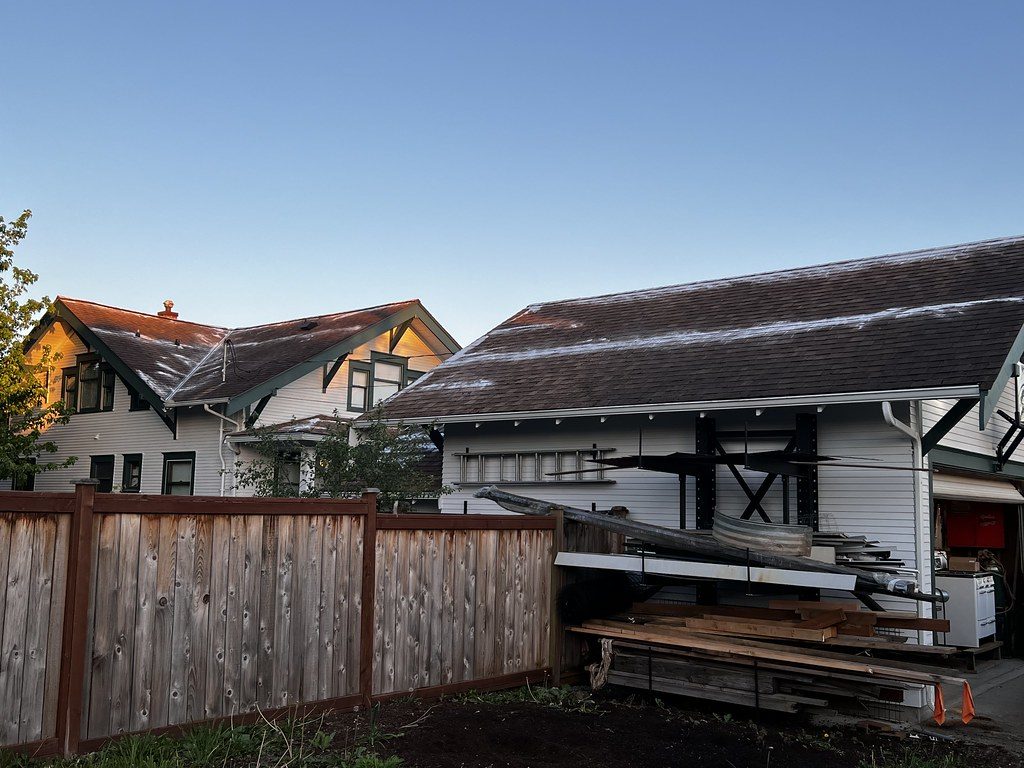
Search for a fix for dark roof streaks and you will be sold a roll of metal within a few clicks. The pitch is always the same: nail a zinc or copper strip under the ridge cap, let the rain do the rest, and never clean the roof again. So do zinc strips work on roofs? The honest answer has two parts, and the second one is the part the product pages leave out.
The first part: the shingle industry does list zinc or copper strips as a prevention option. The second part: the same trade body says not to add them to a roof that is already installed. The Asphalt Roofing Manufacturers Association (ARMA) puts it plainly: “Adding zinc or copper strips to an existing roof is not recommended” (ARMA, Algae and Moss Prevention and Cleaning).
For a Garner homeowner looking at streaks on a roof that has plenty of life left, from Adams Point to Bingham Station, that changes the question. This guide covers what the metal is meant to do, why retrofitting it is the risky part, what the evidence does and does not support, and what to do instead.
How Are Zinc Strips Supposed to Work?
Zinc strips are meant to work by shedding small amounts of metal into rainwater, which then runs down the slope below the strip. The idea is that the metal makes the shingle surface a poor place for algae and moss to settle.
The same principle is used by the shingle makers themselves. CertainTeed, for example, describes its algae-resistant shingles as using “copper-containing granules” whose copper is “gradually released” over time (CertainTeed, Algae-Resistant Shingles). A strip at the ridge is a concentrated version of that idea, placed at one line on the roof instead of spread through every shingle.
Two things follow from how it works:
- It only reaches what the water reaches. Metal carried by runoff travels down the slope below the strip. Sections that do not get that runoff, such as areas below dormers, valleys and the far ends of long slopes, get little or none of it.
- It is prevention, not cleaning. Nothing about the mechanism removes growth that is already there. A streaked roof is still a streaked roof the day after a strip goes on.
Why Does ARMA Say Not to Add Strips to an Existing Roof?
ARMA advises against it because there is no clean way to fasten a strip to finished shingles. In its words, adding strips to an existing roof “will require either applying the strips with exposed nails (which can cause leaks over time) or breaking the sealant bond.”
Both options create the kind of problem a roof is built to avoid:
- Exposed nails. A nail driven through the face of a shingle is a hole with only the nail head and whatever sealant is dabbed on it to keep water out. Sealant weathers, and ARMA notes these can leak over time.
- Breaking the sealant bond. Modern shingles have a strip of adhesive that bonds each course to the one below once the sun warms it. Lifting a course to hide the nails under it breaks that bond, and an unsealed shingle is one the wind can get under.
That is why ARMA frames strips as something that “may be employed when it is time to replace a roof,” alongside algae-resistant copper-granule shingles. On a new roof, a roofer can install metal as part of the system. On a roof that is ten years into its life, the strip itself becomes the weak point.
Pro tip: If a roof cleaning quote includes “adding zinc strips” as an extra, ask one question: how will the strips be fastened? If the answer is nails through the shingles or lifting the courses to hide nails, that is the exact method ARMA advises against. Take the cleaning, skip the strips, and raise metal or algae-resistant shingles with your roofer at replacement time.
What Can Zinc Strips Do, and What Can’t They?
Much of what is written about strips online comes from the companies selling them. Here is what the primary sources actually support.
| Claim you will see | What a primary source supports |
|---|---|
| Strips help prevent algae and moss | ARMA lists zinc or copper strips as a prevention option at roof replacement |
| Strips are fine to add to any roof | ARMA says adding them to an existing roof is not recommended |
| Strips remove existing streaks | No source here supports it; the mechanism is preventive |
| Strips last a set number of years | Lifespans come from sellers; we found no independent source |
| Strips cut regrowth by a set percentage | Percentages come from sellers; we found no independent source |
| Copper and zinc both inhibit growth | ARMA names both; shingle makers use copper in algae-resistant granules |
Where the right-hand column says no source, we are not saying the claim is false. We are saying we could not find anyone other than a seller making it, so we do not repeat it.
What Should You Do Instead on an Existing Roof?
On a roof with years left in it, the better plan is to deal with the conditions that grow algae and to clean when the look bothers you. ARMA’s own prevention list does most of the work:
- Let the sun in. ARMA recommends trimming branches “to allow more sunlight to reach the roof and minimize debris accumulation.” Under Garner’s pine and oak canopy, this is the single biggest change most homes can make.
- Keep water moving. ARMA says to keep gutters draining and not to let an upper roof’s gutter empty onto a lower roof.
- Clean with the published method. When streaks build up, ARMA’s method is a bleach and water solution, a 15 to 20 minute dwell and a low-pressure rinse, never a pressure washer. A professional soft wash roof cleaning follows that method.
It also helps to know what you are preventing. ARMA says there is “no scientific evidence that algae is damaging to asphalt shingles,” while moss can lift shingle edges. If your roof has green clumps rather than dark streaks, our guide to moss on roof shingles covers the growth that matters more. If it is streaking, the black streaks on roof shingles guide explains what they are and how they come off.
What About at Roof Replacement?
At replacement, you have two metal-based options, and both are installed as part of the new roof rather than added later: strips fitted by the roofer during installation, or algae-resistant shingles that carry copper in the granules across the whole surface. The second option covers every shingle, not just the runoff path below one line. Ask your roofer which the shingle manufacturer supports and how each affects the product’s warranty, and get the answer in writing.
Frequently Asked Questions
Do zinc strips work on roofs that already have streaks?
Not as a cleaning method. Strips are preventive: they work on runoff going forward and do nothing to growth already on the shingles. And on an existing roof, ARMA advises against adding them at all because of exposed nails or broken sealant bonds.
Is copper better than zinc?
No primary source we found ranks them. ARMA names both as options at replacement, and shingle makers such as CertainTeed use copper in their algae-resistant granules. Treat any head-to-head claim from a seller as marketing.
How long do zinc strips last?
We could not find an independent figure. The lifespans quoted online come from the companies selling strips, so we do not repeat them.
Can zinc strips damage my roof?
The strip itself is not the problem; the fastening is. ARMA warns that retrofitting means either exposed nails, which can cause leaks over time, or breaking the sealant bond between shingle courses.
What about my gutters? Do they need metal too?
Gutters are a separate problem. The black stripes on gutter faces are usually explained as roof runoff residue bonded to a weathered finish, not the same growth you see on shingles, and strips on the roof do not remove them. Our post on gutter tiger stripes goes into why. Gutter brightening is how those come off.
What drives the price of cleaning the roof instead?
Roof size, pitch, height and how heavy the growth is. Our NC roof cleaning cost guide explains each factor without guesswork.
Streaks on an Existing Roof? Clean It, Don’t Nail It
So, do zinc strips work on roofs? The idea is sound enough that ARMA lists strips as a prevention option, but only when a roof is being replaced. On the roof you have now, the industry’s advice is to skip the retrofit, let more sun in, keep the water moving, and clean with the low-pressure method when the streaks bother you.
We can quote low-pressure roof cleaning for homes in Garner, Clayton, South Raleigh, Willow Spring and Fuquay-Varina, with up-front pricing and a free quote. Contact us with a photo of your roof, or read the Garner pressure washing cost guide to see how pricing works.