How to Get Red Clay Stains Off Concrete
Garner Pressure Washing • July 14, 2026 • 8 min read
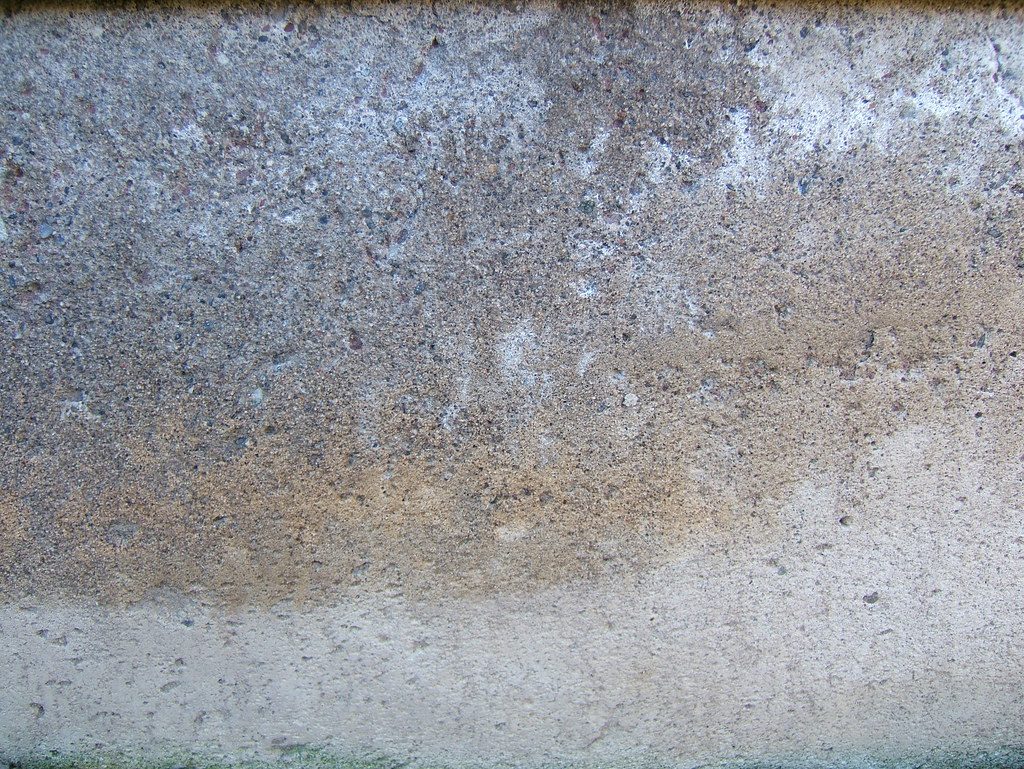
If you own a driveway in Garner, you already know the stain: an orange wash creeping up the apron, a rusty ring around the downspout, a tinted stripe where sprinklers overspray. Red clay stains on concrete are the signature blemish of southeast Wake County, and they are famously stubborn. A garden hose does nothing, a rented pressure washer often makes things look worse, and the stain returns with every hard rain.
The frustrating part is that most homeowners attack red clay like it’s dirt. It isn’t. It’s a mineral stain, chemically closer to rust than to mud, and it has to be treated that way. This guide covers why Wake County clay turns concrete orange, why plain pressure washing fails, what actually dissolves the stain, and how to keep clay off your concrete for good, whether you’re in Adams Point, South Creek, or a ranch near Lake Benson.
Why Does Red Clay Stain Concrete Orange?
Red clay stains concrete orange because Piedmont clay is loaded with iron oxides, the same mineral family that makes rust. When Wake County clay gets wet, iron-tinted water soaks into your concrete, which is porous, more like a hard sponge than a sheet of glass. The water wicks into those pores and evaporates, and the iron oxidizes and locks into the surface as a mineral deposit.
That’s the key mental shift: a red clay stain is a rust stain, not a layer of dirt sitting on top. The loose mud rinses away; the orange tint that remains is iron bonded inside the top layer of the slab. That’s why the stain survives rain, hoses, dish soap, and even bleach, and why it deepens with every hard Garner thunderstorm. A faint tint in spring can be a solid orange band by fall.
Why Doesn’t Plain Pressure Washing Remove Red Clay Stains?
Plain pressure washing fails on red clay because pressure removes what sits on concrete, not what has soaked into it. Water at high pressure will blast off surface mud, algae film, and gray grime, and the orange mineral stain underneath will still be there, often looking more obvious against the freshly cleaned concrete around it.
A DIY wand attempt usually creates two new problems:
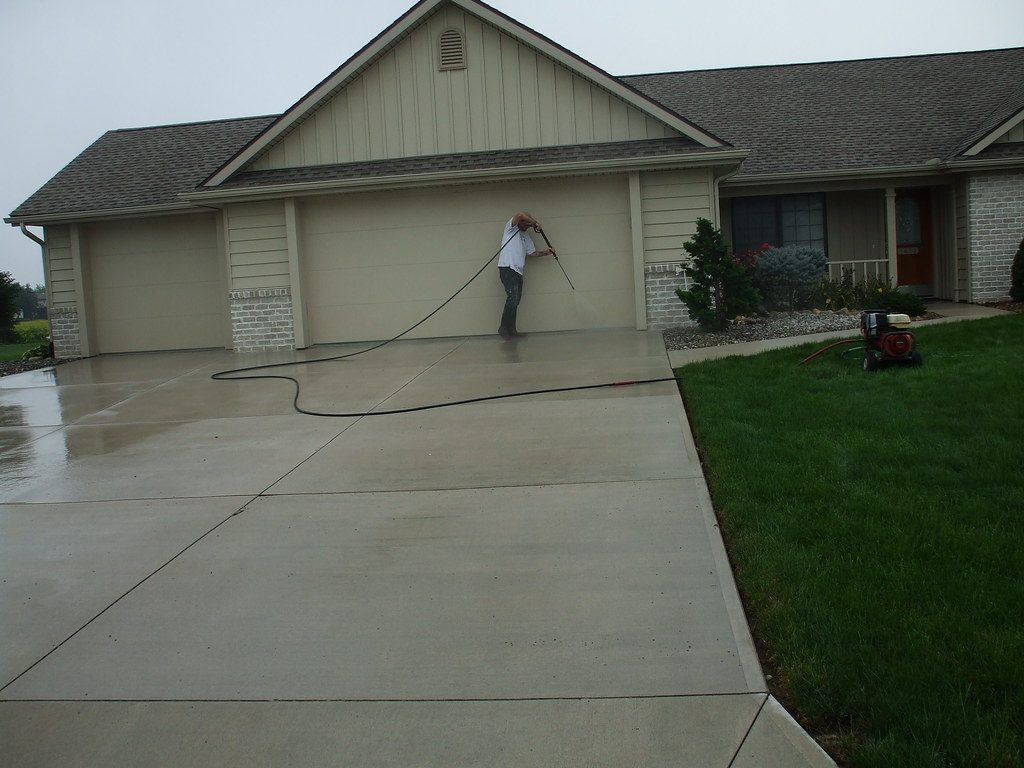
- Wand stripes. A pressure wand cleans a narrow path at a time, and overlapping passes at different angles leave zebra striping that can be harder to fix than the original stain.
- Driving the stain deeper. Blasting wet clay slurry can force iron-rich water further into the pores, and a narrow tip held too close etches the surface. Etched concrete is rougher and more porous, so it grabs the next round of clay runoff even faster.
This is the pattern behind most “I pressure washed it and now it looks worse” driveways in Garner. The tool wasn’t wrong, the sequence was: pressure is the rinse step, not the treatment step.
What Actually Removes Red Clay Stains From Concrete?
Removing red clay stains takes rust-family chemistry first, then controlled washing. Because the stain is iron oxide, it responds to the same acids that dissolve rust: oxalic acid and specialty rust-removal blends made for concrete. The chemistry converts the bonded iron into a form that rinses away; only then does pressure equipment finish the job. The professional process:
- Pre-treat the stained areas with oxalic-based or specialty rust-removal chemistry and let it dwell.
- Clean the full slab with a surface cleaner, a spinning-bar machine that washes in wide, even passes so there are no wand stripes.
- Controlled rinse that flushes dissolved iron and clay residue off the slab and away from landscaping.
Here’s how the common approaches actually stack up against red clay:
| Method | What It Does to Red Clay Stains | Verdict |
|---|---|---|
| Garden hose | Rinses loose mud; the orange stain stays | Won’t work |
| Rented pressure washer, wand only | Cleans surface grime, leaves the iron stain plus stripes | Often looks worse |
| Household bleach | Kills algae and mildew; does nothing to iron oxide | Wrong chemistry |
| Oxalic acid cleaner, applied by hand | Dissolves iron in small spots with dwell time and scrubbing | Good for spot stains |
| Rust chemistry + surface cleaner + rinse | Dissolves the stain across the whole slab with an even finish | The full fix |
This is exactly the combination behind our rust and stain removal work, and on driveways it pairs with full driveway and concrete cleaning so the treated spots blend into a uniformly clean slab instead of standing out as bright patches.
Pro tip: Whatever chemistry you use, never let it dry on the concrete. Work in shade or in the morning, keep the surface wet, and pre-soak nearby grass with plain water first. Rust-removal acids are hard on plants, so the dilution rinse afterward matters as much as the treatment.
Should You Try DIY Red Clay Stain Removal?
For a few small spots, yes, DIY is a reasonable first move. A dinner-plate-sized stain by the downspout or a ring under a planter is a fair match for an oxalic acid based cleaner from the hardware store (often sold as wood bleach or deck brightener). Wet the spot, apply the product, let it dwell 5 to 10 minutes without drying, scrub with a stiff brush, and rinse thoroughly. Wear gloves and eye protection, and expect to repeat the cycle on older stains.
Where DIY falls apart is scale. A stained driveway in Eagle Ridge or Turner Farms might be 600 to 1,000 square feet. Treating that evenly by hand takes gallons of chemistry, and uneven dwell times leave a blotchy, tie-dyed finish. A uniform result across a full slab requires a surface cleaner, dilution equipment, and enough water flow to rinse dissolved iron off before it re-deposits, gear most homeowners don’t own and can’t rent cheaply.
A good rule: spots are DIY, slabs are not. If the orange covers more than a couple of square feet, check the Garner pressure washing cost guide to see what professional treatment runs before you spend a Saturday on it.
Where Does the Red Clay Come From, and How Do You Keep It Off?
In Garner, red clay stains almost always trace back to one of four sources:
- New-construction lots. Subdivisions still building out, like the newer sections around Adams Point, South Creek, and Bingham Station, have bare graded clay on every side. Every storm sends orange runoff across fresh driveways, which is why two-year-old concrete there often looks worse than 20-year-old slabs in Aversboro Forest.
- Irrigation water. Well-fed sprinkler systems often carry dissolved iron, painting a repeating orange arc on driveways and curbs that is literally rust from the first drop.
- Downspout splash. Roof runoff concentrated at a downspout splashes clay onto the adjacent slab and foundation, rain after rain.
- Garden beds and bare edges. Beds that sit higher than the driveway, or thin lawn edges, bleed clay across the concrete every time it pours.
Prevention is mostly about breaking the splash cycle. Put splash blocks or downspout extensions under every downspout. Keep a border of mulch, pine straw, or river rock between bare soil and concrete. Re-seed thin lawn edges. And once the concrete is cleaned, consider sealing it: sealer closes the pores that let iron-rich water soak in, so future splash rinses off instead of setting. If your driveway has already drawn attention from the neighborhood, our post on handling an HOA letter about a dirty exterior covers the fastest way to close out a notice.
Frequently Asked Questions
Does red clay permanently stain concrete?
No, red clay stains are removable, but they will not fade on their own. The iron oxide stays bonded in the pores until it’s chemically dissolved. The longer it sits, the deeper it penetrates, so a stain from last month comes out far easier than one that has built up over five Garner summers.
Will bleach remove red clay stains from concrete?
No. Bleach (sodium hypochlorite) is the right chemistry for organic staining like algae and mildew, but it has no effect on iron oxide. You can brighten the concrete around the stain and the orange will remain. Red clay needs an acid-side product, typically oxalic acid or a purpose-made rust remover for concrete.
How much does red clay stain removal cost in Garner?
Most Garner driveway cleanings land in the $150 to $300 range, and specialty stain treatment for red clay or rust typically adds roughly $50 to $150 depending on how large and set-in the staining is. For an exact number, request a free quote with a photo of the stain and we’ll price it up front.
Can I use muriatic acid on red clay stains?
You can, but it’s a poor first choice. Muriatic (hydrochloric) acid is aggressive enough to etch and lighten the concrete itself, leaving a pale patch that looks as bad as the stain, and its fumes are hazardous. Oxalic-based products are far more forgiving. Set-in stains that resist oxalic are a job for professional rust and stain removal chemistry, not a stronger hardware-store acid.
Why is my brand-new driveway already stained orange?
Because new concrete sits in the middle of a construction zone. Fresh subdivisions have bare graded clay on every side, and young concrete is at its most porous before it fully cures and gets sealed. A few storms are enough to tint a month-old driveway. It cleans up well, and sealing it afterward is the best money a new-build owner can spend on the slab.
Does sealing concrete prevent red clay stains?
Mostly, yes. Sealer closes the pores that let iron-bearing water soak in, so clay splash sits on the surface and rinses off instead of setting. It isn’t armor, heavy repeated splash will eventually tint it, so pair sealing with splash control and a regular cleaning rhythm. Our guide on how often to pressure wash a house in NC covers a schedule that keeps clay from getting established.
Get the Orange Out: Red Clay Stain Removal in Garner
Red clay stains on concrete are Wake County’s most common driveway complaint, and one of the most fixable. The right rust-family chemistry, a surface cleaner instead of a striping wand, and a controlled rinse take a driveway back to uniform gray, and splash control plus sealing keep it that way.
We treat red clay, rust, and irrigation staining on driveways, sidewalks, patios, and curbs across Garner, Clayton, South Raleigh, Willow Spring, and Fuquay-Varina. Pricing is up front and quotes are free: see the pressure washing cost guide for typical numbers, or contact us with a photo of your stain for an exact price.