When Can You Pressure Wash New Concrete?
Garner Pressure Washing • September 26, 2026 • 9 min read
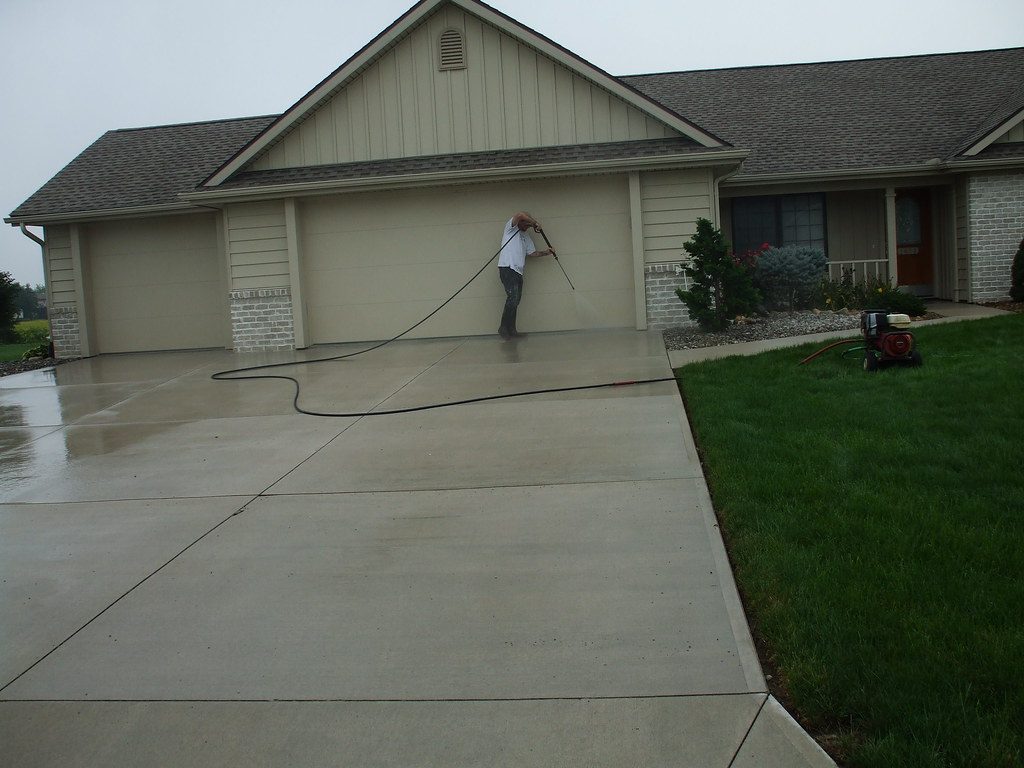
You closed on a new build in Bingham Station or South Creek, the driveway is a few weeks old, and it already looks tired. Construction trucks tracked red clay up the apron, the landscapers left mud along the edges, and the first thunderstorm painted an orange fan across the slab. The obvious question is when can you pressure wash new concrete without hurting it.
The short answer: a gentle garden hose rinse is fine almost straight away, but a real pressure wash should wait until the slab reaches its 28-day mark. That number is not a washing rule anyone publishes. It comes from the way concrete gains strength, and the cleaning industry builds its wait around it.
Southeast Wake is full of young driveways right now. The I-40, US-70 and NC-42 corridors keep adding subdivisions from Adams Point to White Oak, and every one of them pours new concrete next to bare graded clay. This guide covers what happens inside a slab in its first month, what you can safely do week by week, what to do about stains that show up early, and how to plan the first proper wash and seal.
When Can You Pressure Wash New Concrete?
Wait at least 28 days after the pour before pressure washing new concrete, and longer if the slab was poured in cold weather or with a slow-curing mix. Before that, stick to sweeping and a low-pressure hose rinse.
The reason is the benchmark itself. The American Cement Association states that standard practice is to measure concrete’s compressive strength at 28 days, and that most of the strength develops in the first few weeks after placement. So day 28 is the point at which a slab is expected to be close to the strength it was designed for. Hitting a younger slab with concentrated water pressure is asking the weakest version of that concrete to take the hardest treatment.
Two honest caveats. First, “wait 28 days before washing” is industry practice built on that benchmark, not a line in a code book. Second, the same source notes that some mixes using supplementary cementitious materials gain strength more slowly, and some specifiers now call for 56-day or even 90-day strength. If your builder used one of those mixes, a longer wait is sensible, and your concrete contractor is the person to ask.
What Is Happening Inside a Slab in Its First Month?
New concrete is curing, which is a chemical process, not simply drying out. Cement reacts with water (hydration) and that reaction is what builds strength. The Cement Association’s curing guidance puts it plainly: the longer concrete is kept moist, the stronger and more durable it becomes, and it recommends curing surfaces by sprinkling with water, fogging, or covering with moisture-retaining fabric.
That has a useful consequence for homeowners: water itself is not the enemy of new concrete. Pressure is. Keeping a young slab damp is part of curing it. What you want to avoid is a narrow, high-energy jet working on the top layer before it has hardened.
That top layer matters more than people expect. The finished surface of a broom-finished driveway is a thin layer of fine paste and sand. It is the part you see, the part that holds the broom texture, and the part a pressure wand erodes first. Etch it on a young slab and you get:
- Wand marks and stripes that stay visible after the concrete fully hardens
- Exposed sand and small stone where the paste has been cut away
- A rougher, more open surface that soaks up the next round of clay splash and stains faster
None of that shows up as a crack. It shows up as a driveway that never looks as even as the one next door.
A Week-by-Week Guide for a New Driveway
Here is how the first month and a bit usually plays out. Timeframes are for a standard mix poured in mild weather; treat them as a planning guide and defer to your contractor’s instructions for your slab.
| Age of the slab | What is safe | What to avoid |
|---|---|---|
| First 24 to 48 hours | Nothing. Keep off it and follow the contractor’s curing plan | Foot traffic, hoses, anything placed on it |
| First week | Light foot traffic once allowed; gentle mist or hose if the contractor asks you to keep it damp | Vehicles (unless cleared), pressure washers, chemical cleaners |
| Weeks 2 to 4 | Sweeping; a low-pressure hose rinse of loose mud and clay | Pressure washers, surface cleaners, acid-based stain removers |
| Day 28 onward | A first pressure wash with a surface cleaner at moderate settings | A narrow tip held close to the surface |
| After the first wash | Sealing, once the slab is clean and dry and the product label allows it | Sealing over damp concrete or over clay that has not been removed |
The 28-day mark also matches what sealer makers publish. Rust-Oleum’s RockSolid concrete sealer instructions, for example, ask for new concrete to cure a minimum of 28 days before sealing. Other products vary, so read the label on whatever you buy.
Pro tip: Write the pour date on the inside of your garage door or in your closing folder. Months later, when you are deciding whether to wash, seal, or treat a stain, “about a month ago” is not good enough, and the builder’s paperwork is rarely where you need it.
My New Driveway Is Already Stained. What Now?
Rinse loose mud early and gently, and leave the orange staining for after day 28. Loose clay and dirt sitting on the surface can come off with a hose and a soft broom at any point after the first week. That is worth doing, because wet clay left to dry on the slab keeps feeding iron into it.
The orange tint that stays behind is a different problem. Red clay stains are a mineral stain, and the fix is rust-family chemistry followed by an even wash. Our guide on getting red clay stains off concrete explains why the garden hose stops working at that point and what does. On a young slab, hold off on any acid-based stain remover until the concrete has cured, and check each product’s label for a minimum concrete age before you use it.
If the staining is from something other than clay, the pattern usually gives it away. Speckles from lawn fertilizer and arcs from well-fed sprinklers are covered in our guide to rust stains on concrete, and drips under a parked car belong with our walkthrough on oil stains on a concrete driveway.
How Should the First Wash Be Done?
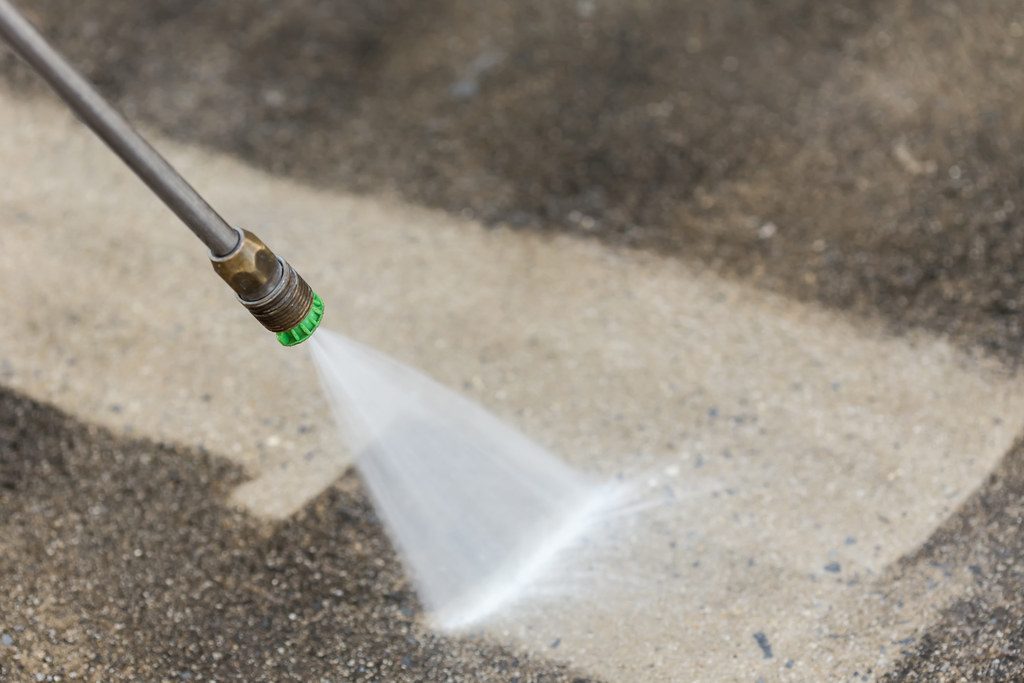
The first wash should use a surface cleaner at moderate settings, not a wand at close range. A surface cleaner is a spinning-bar machine that holds the nozzles at a fixed height and cleans in even, overlapping circles, so there are no stripes and no single spot gets hammered.
A sound first wash on a new driveway looks like this:
- Sweep the whole slab so grit is not dragged across the surface.
- Pre-treat any clay or rust staining that has had time to set, now that the concrete is old enough.
- Surface clean in overlapping passes at a moderate setting, working with the slope.
- Rinse the edges and joints by wand at a safe distance, keeping the tip moving.
- Direct the rinse water to the lawn rather than the street drain.
- Let it dry fully before any sealer goes down.
This is the sequence behind our driveway and concrete cleaning service, and on young slabs we can quote the wash and the stain treatment together so the treated spots blend in. If you want a feel for what drives the price of a driveway wash before you ask, our Garner driveway cleaning cost guide walks through it.
Frequently Asked Questions
Can I hose off my new concrete driveway?
Yes, once the contractor says the slab can take foot traffic, a low-pressure garden hose rinse is fine. Keeping new concrete damp is part of curing it, so plain water from a hose does no harm. The thing to avoid is a pressure washer or a jet nozzle aimed close to the surface in the first 28 days.
How long after pouring can you pressure wash concrete?
Plan on at least 28 days. That is the standard point at which concrete strength is measured, and cleaning contractors use it as their wait. Slabs poured in cold weather, or with slow-curing mixes that some builders now use, may need longer, so ask whoever poured it.
Will pressure washing new concrete ruin it?
The bigger risk is marking it rather than breaking it. A narrow tip on young concrete can etch the surface paste, leaving stripes and exposed sand that stay visible long after the slab has hardened. That is a cosmetic problem you cannot wash away later, which is why waiting a few weeks is worth it.
When should I seal a new driveway?
After the slab has cured (many sealer labels say at least 28 days), has had its first proper cleaning, and is fully dry. Sealing over clay splash or construction dirt locks the stain in. In Garner’s humid summers, give the slab a clear dry day after washing before any sealer goes on.
Why is my month-old driveway already orange?
Because new-build lots around Garner sit next to bare red clay, and every storm splashes it onto the slab. Young concrete is porous and picks it up fast. It is removable once the concrete has cured; our rust and stain removal work is built for exactly this kind of iron-based staining.
Is winter a bad time to wash a new slab?
Cold slows curing, so a driveway poured in December may not be where a summer slab would be at 28 days. Give it longer, and avoid washing any concrete when water could freeze on the surface. If you are unsure, send us a photo and the pour date and we can tell you whether it is ready.
Planning the First Wash on New Concrete
Knowing when you can pressure wash new concrete saves you from the one mistake that cannot be undone on a young slab. Rinse gently for the first month, wait for the 28-day mark, treat the clay or rust that has settled in, then wash with a surface cleaner and seal once it is dry.
We clean new and established driveways, sidewalks and patios across Garner, Clayton, South Raleigh, Willow Spring and Fuquay-Varina, with up-front pricing and free quotes. See the pressure washing cost guide for how pricing works, call (919) 322-8083, or request a quote with a photo and your pour date.
Sources: American Cement Association: Drying concrete vs curing concrete, American Cement Association: Curing in construction, Rust-Oleum RockSolid Penetrating Concrete Sealer technical data sheet